A clogged toilet is one of those household problems that demands immediate attention. If your plunger has failed and the water just won’t drain, it is time to reach for a more powerful tool: a plumbing snake. Learning how to use a plumbing snake on a toilet is a skill every homeowner should have. It can save you the time, stress, and expense of an emergency plumber call. This guide covers everything you need to know, from understanding what a toilet snake is to clearing the clog and preventing the next one.
What Is a Toilet Snake (and How Is It Different from Other Drain Snakes)?
Walk into any hardware store and you will find a wall of drain clearing tools that all look vaguely similar. Understanding what sets a toilet snake apart from the rest is the first step toward using the right tool for the job and protecting your bathroom in the process.
How a toilet snake works: the mechanics explained
A toilet snake is a long, flexible metal cable wound around a central core. One end has a coiled or auger-style tip designed to bore into a clog, break it apart, or hook onto it so it can be pulled free. The other end connects to a handle or crank that you use to feed the cable down into the drain. As you turn the crank, the cable winds its way through the curves of your toilet’s internal plumbing until it reaches the blockage. The rotational motion either grinds through the clog or snags it, allowing you to retract it back out of the pipe.
Toilet snake vs. drain snake vs. cable auger: which do you need?
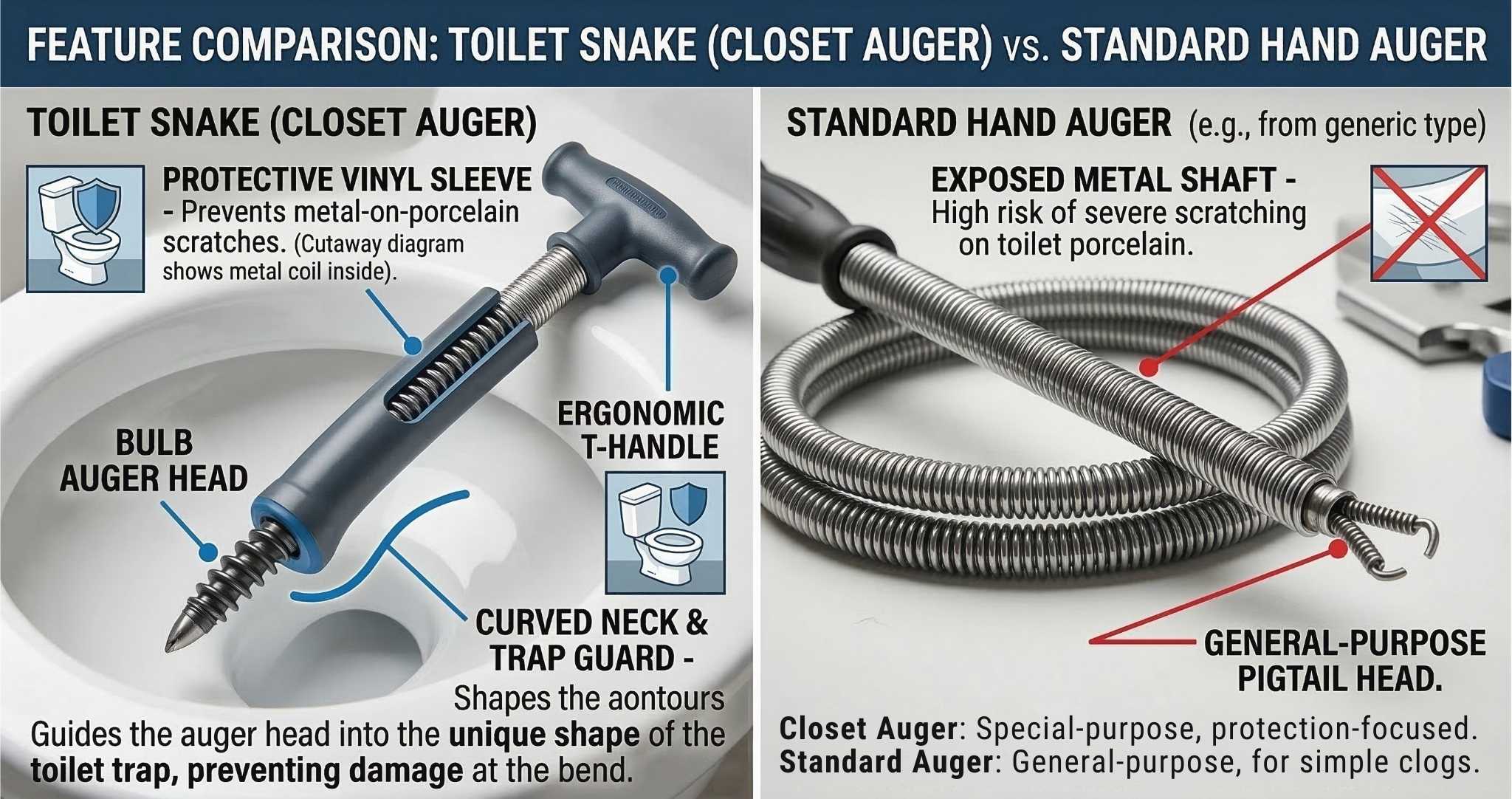
These terms are often used interchangeably, but they describe different tools with different applications. A standard drain snake is a general-purpose tool built for sinks, shower drains, and floor drains. A cable auger is a heavier-duty version, typically housed in a drum or spool, used for deeper or more stubborn blockages. A toilet snake, also called a closet auger, is purpose-built for toilets. The key difference is that toilet snakes have a curved neck and a protective sleeve designed to navigate the toilet trap without getting tangled or stuck. Choosing the wrong type can mean damaging your pipes or simply not reaching the clog at all.
Manual vs. power auger: when does it matter?
For most homeowners dealing with a standard toilet clog, a manual toilet snake is all you will ever need. The vast majority of toilet blockages occur within the first few feet of pipe, right at the toilet trap, making a motorized tool unnecessary. Power augers, which use an electric motor to drive the cable much deeper into the plumbing system, are better suited to main line clogs or blockages that sit well beyond the toilet itself. Renting a power auger is a reasonable option if a manual snake repeatedly fails, but it should not be your starting point.
The rubber coating detail: why it matters for your porcelain
This is one of the most overlooked details when people shop for a drain clearing tool. A standard drain snake has a bare metal cable that will scratch, gouge, or crack porcelain if it contacts the bowl. A toilet auger is specifically designed with a rubber or vinyl protective coating around the shaft and the section of cable that sits inside the bowl. This coating acts as a buffer between the metal and your toilet’s finish. If you use a generic drain snake on a toilet and drag the metal cable across the porcelain, you can cause cosmetic damage that is impossible to reverse. Always verify your tool has a protective coating before inserting it into the bowl.
When Should You Use a Toilet Snake?
Knowing when to graduate from a plunger to a snake saves time and avoids making the situation worse. There are clear signals that tell you a plunger is no longer the right tool for the job.
Signs a plunger isn’t going to cut it
A plunger works by creating hydraulic pressure to dislodge a clog near the surface of the drain. If you have plunged vigorously for several minutes and the water level is not dropping, or if the toilet drains very slowly but never fully clears, the clog is likely too dense, too deep, or too firmly lodged for pressure alone to move it. Another telltale sign is when the toilet gurgles after flushing even without a visible overflow, which suggests a partial obstruction somewhere in the pipe. At this point, a snake is the logical next step.
How to tell where the clog is before you start
Before feeding the snake down the drain, take a moment to assess the situation. If the snake meets resistance almost immediately, the blockage is sitting right at the toilet trap, the curved section of pipe built into the porcelain base of the toilet. This is the most common location for clogs and the easiest to clear. If the snake feeds several feet before hitting resistance, the clog is further down the drain line, which may require a longer cable or a professional assessment if it turns out to be in the main sewer line. Understanding the approximate location of the clog helps you set realistic expectations before you begin.
Is snaking safe for septic systems?
Homeowners on septic systems often wonder whether snaking a toilet could disturb the delicate bacterial balance in their tank or cause physical damage to the septic line. In general, snaking is safe for septic systems when done correctly. The snake cable stays within the toilet and the immediate drain line, not reaching the tank itself under normal circumstances. However, if you are repeatedly experiencing clogs and you are on a septic system, it is worth having the tank inspected. Frequent blockages can sometimes be a symptom of a full or failing septic tank rather than a simple pipe obstruction, and snaking will only provide temporary relief in that case.
What You Will Need Before You Start
Preparation makes the process faster, cleaner, and safer. Gathering your tools and setting up properly before you begin means you will not be hunting for supplies mid-job with dirty gloves on.
Tools and supplies checklist
Before you start, make sure you have the following on hand:
- A toilet auger or closet snake with a rubber-coated shaft
- Heavy-duty rubber or nitrile gloves
- Old towels or newspaper to lay on the floor around the toilet base
- A bucket for any debris you extract
- A plastic bag for disposal
- Eye protection if the toilet is severely backed up
It is also worth turning off the water supply valve located behind the toilet before you begin. This prevents an accidental flush from causing an overflow while your hands are in the bowl.
How to buy vs. rent a toilet snake: cost and use case comparison
A basic manual toilet auger typically costs between fifteen and forty dollars at a hardware store, making it an affordable addition to any home toolkit. If you are dealing with a one-time clog and have no desire to keep the tool afterward, renting from a hardware store is a legitimate option, often available for a few dollars per day. However, given the low purchase price and the near-certainty that you will face at least one more clog in the life of the home, buying is usually the smarter choice. Power augers, which run much higher in price, are best rented rather than purchased for occasional household use.
Setting up your workspace to minimize mess
Toilet snaking is an effective process, but it is not a clean one. Lay old towels down around the base of the toilet and extending a few feet in front of the bowl. When you retract the snake, whatever was clogging the pipe comes with it, and it will drip as you pull it out. Keep a bucket nearby to deposit debris directly, rather than setting it on the floor. If the water in the bowl is particularly high, use a small cup to reduce the water level before inserting the snake. Lower water levels mean fewer splashes and a cleaner workspace.
How to Use a Plumbing Snake on a Toilet: Step-by-Step
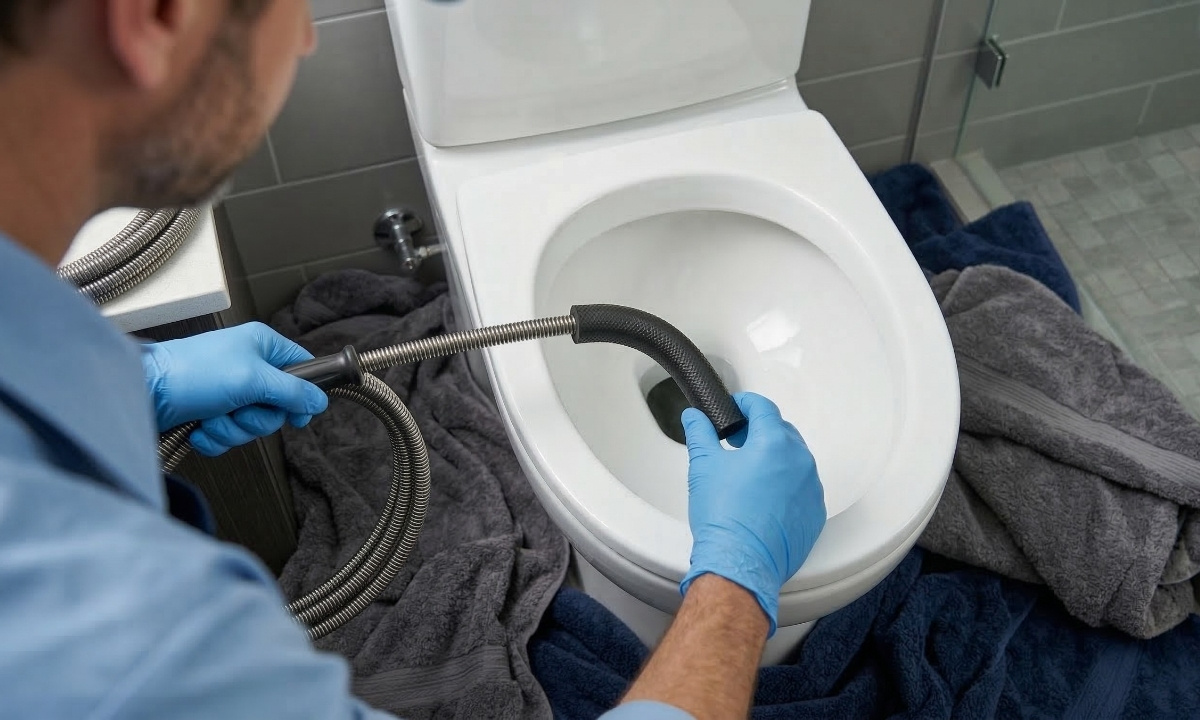
With your tools ready and your workspace prepared, you are ready to clear the clog. Follow these steps carefully and take your time, especially around the curves of the toilet trap.
Step 1: Prep the snake and your workspace
Put on your rubber gloves and eye protection. Uncoil the snake from its housing and check that the rubber sleeve is properly seated around the shaft. If your auger has a cable that is taped or tied for storage, remove any restraints so the cable can feed freely. Position yourself in front of the toilet with your towels in place and your bucket within reach. Make sure the water supply valve is closed.
Step 2: Insert and feed the cable into the drain
Place the curved end of the toilet auger into the bowl, guiding the rubber-protected neck into the drain opening. Hold the body of the auger steady with one hand and begin turning the crank clockwise with the other. Feed the cable slowly and steadily. Do not force it. If you feel resistance, ease up slightly and try rotating the cable at different angles to navigate the curve of the trap. The goal is to guide the tip around the S-bend and into the main drain pipe beyond.
Step 3: Engage and break up (or hook) the clog
Once you feel the cable stop advancing, you have reached the blockage. At this point, apply gentle forward pressure while continuing to rotate the crank. The rotating motion will either bore through the clog, breaking it into smaller pieces that can flush away, or the coiled tip will hook into the material, allowing you to pull it back out. You will typically feel a give or a slight drop in resistance when the clog begins to break apart. If you feel something solid catch on the tip and hold firm, that is your signal to begin retracting.
Step 4: Retract the snake and remove debris
Turn the crank counterclockwise to begin retracting the cable. Pull slowly and steadily. If you hooked the clog, it will come up with the snake. Have your bucket positioned directly below the drain opening so that as the cable emerges, anything attached to it drops into the bucket rather than back into the bowl or onto the floor. Once the cable is fully retracted, examine what you pulled out. If it is a partial clog, repeat the process until nothing more comes up.
Step 5: Flush, confirm, and clean the snake
With the snake fully retracted and set aside, turn the water supply valve back on and give the toilet a full flush. Watch the water level carefully. If it drains at a normal pace and the bowl refills correctly, the clog is cleared. If the toilet still drains slowly, the blockage may only be partially cleared and you should repeat the process. Once you have confirmed a successful clear, clean the snake thoroughly with warm soapy water, disinfect it, dry it completely, and store it properly to prevent rust and bacterial buildup.
Troubleshooting: What to Do When Things Don’t Go as Planned
Even with the right technique, snaking a toilet does not always go smoothly on the first try. Here is how to handle the most common complications without causing additional damage.
The snake won’t feed down the drain
If the cable meets immediate, firm resistance and will not advance at all, the clog is sitting right at the top of the toilet trap. This is actually a favorable situation because it means the blockage is as close to you as it can be. Rather than forcing the snake harder, try adjusting the angle of the auger neck and rotating the cable slowly as you apply gentle pressure. Sometimes a slight repositioning is all it takes to get the tip around the curve. If the snake still will not advance, the drain may be completely sealed, in which case removing the toilet from its floor mount may be required to access the trap directly.
You hit resistance but can’t clear the clog
If the snake reaches the clog but rotating and pressing does not break it up or hook it, you may be dealing with a solid object rather than an organic blockage. Hard objects like toys, toiletry bottles, or phone cases will not yield to an auger tip the way paper or waste does. In this case, try retracting the snake and reinserting it at a slightly different rotation to approach the object from a different angle. If repeated attempts fail, a plumber can use a camera to identify the object and extract it without causing further damage.
The clog clears but the toilet is still draining slowly
A slow drain after snaking usually means one of two things. Either small fragments of the clog were knocked loose but settled slightly further down the pipe, or there is a secondary blockage deeper in the drain line. Run the full flush cycle two or three times and monitor the drain speed each time. Flushing hot water from a bucket into the bowl can also help push loosened debris further along. If the slow drain persists after several flushes and a second snaking, the problem likely lies further down in the main drain or sewer line, which requires professional attention.
What to do if the snake scratches or damages the bowl
If you notice scratches on the porcelain after snaking, the most likely cause is using a non-toilet-rated snake without a rubber coating, or allowing the bare metal cable to drag across the bowl surface during insertion or retraction. Light surface scratches on porcelain can sometimes be buffed with a pumice stone specifically designed for toilet bowls. Deeper gouges or cracks are permanent cosmetic damage and may eventually harbor bacteria or staining. Going forward, always confirm your tool has a rubber-coated shaft before using it in a toilet.
The Most Common Causes of Toilet Clogs
Understanding why your toilet clogged in the first place is just as important as clearing the blockage. Most clogs are preventable, and identifying the cause helps you avoid a repeat situation.
Too much toilet paper
Toilet paper is designed to dissolve in water, but that process takes time. Flushing large amounts at once, particularly with thicker or quilted varieties, can overwhelm the toilet trap before the paper has a chance to break down. If you or members of your household use generous amounts of paper per flush, consider flushing mid-use rather than all at once, or switching to a thinner single-ply option. Households that use a bidet attachment can significantly reduce paper usage and, as a result, meaningfully reduce their risk of paper-related clogs.
Non-flushable items: wipes, paper towels, floss, and more
Despite what some packaging claims, the only thing that should go down a toilet besides human waste is toilet paper. Unlike toilet paper, products such as baby wipes, makeup remover pads, floss, paper towels, and cotton balls do not dissolve in water. They accumulate in the trap and pipe over time, eventually forming a dense blockage that no amount of flushing will clear. Keep a small covered trash bin within reach of the toilet as a constant, convenient reminder that everything else belongs there rather than in the bowl.
Accidentally dropped objects
Phones, jewelry, small toys, toiletry caps, and hair clips are among the most frequently retrieved items from toilet drains. When an object falls in, the instinct is often to flush and hope it clears. Resist that instinct. Solid, non-dissolvable objects will lodge firmly in the trap and create an immediate, complete blockage. If an object falls in and is visible, retrieve it by hand with gloves on before it slips further down. If it has already disappeared from view, do not flush. Call a plumber who can use a camera to locate and extract the item safely.
Buildup in the toilet trap over time
Not all clogs arrive suddenly. Mineral deposits from hard water, soap residue, and gradual accumulation of waste material can slowly narrow the internal diameter of the toilet trap over months or years. A toilet that seems to flush with slightly less force than it used to, or that requires two flushes more often than before, may be developing a slow buildup clog. Periodic maintenance, including occasional hot water flushes and mild descaling treatments, can prevent these gradual blockages from becoming a complete obstruction.
How to Prevent Toilet Clogs Before They Start
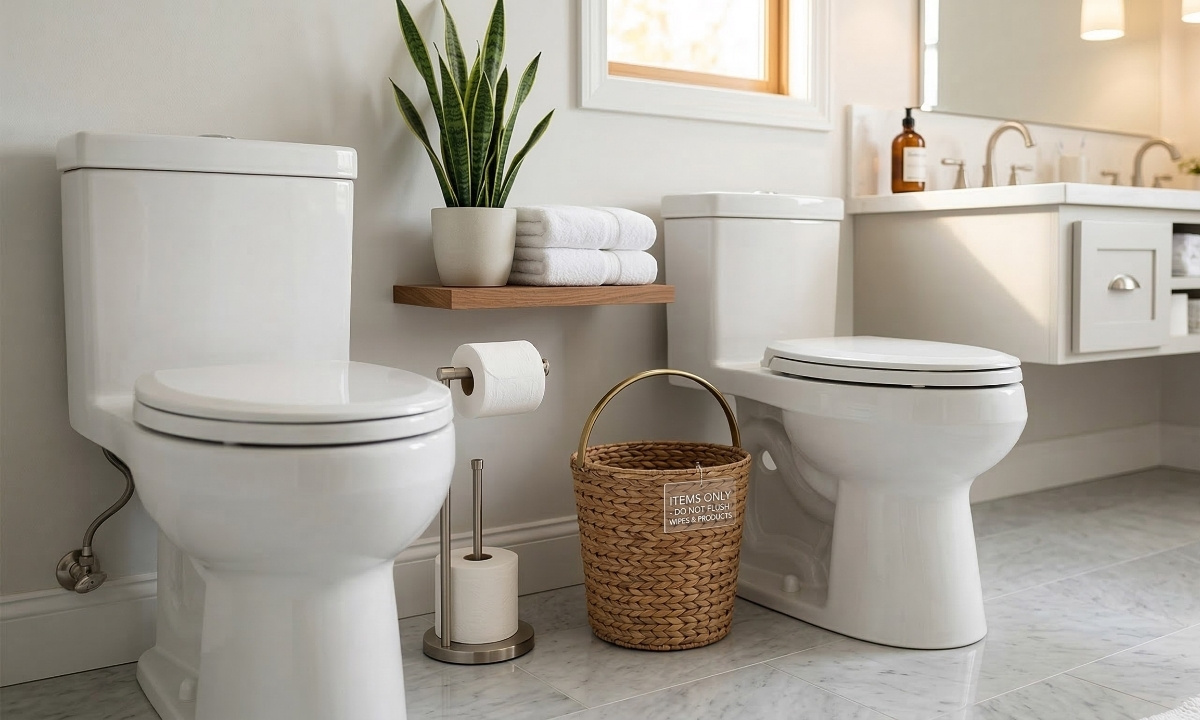
The most efficient way to deal with a clogged toilet is to ensure it never clogs in the first place. A few consistent habits go a long way toward keeping your plumbing clear year-round.
Flushing habits that protect your pipes
Always keep the toilet lid closed when not in use. This single habit prevents countless accidental drops of objects that then become clogs. Teach every member of the household, especially children, about what can and cannot be flushed. Post a small reminder near the toilet if necessary. Additionally, avoid flushing multiple large items at once, even if they are all toilet paper. Small, incremental flushes are gentler on your plumbing than large single loads.
Why you should avoid chemical drain cleaners like Drano
It is tempting to reach for a bottle of chemical drain cleaner when a clog develops. However, products like Drano are formulated with highly caustic ingredients that generate heat as they react with the blockage. This heat and chemical reaction can soften or warp the wax ring seal at the base of the toilet, damage PVC pipes over time, and corrode older metal plumbing. They are also ineffective against solid object clogs and can actually make a blockage harder to remove manually if they partially dissolve organic material and redeposit it further down the pipe. A snake and some patience will always outperform a chemical solution on a toilet clog.
Routine drain maintenance: hot water, baking soda, and vinegar
Incorporating simple maintenance into your household routine can prevent buildup before it becomes a blockage. Once a month, pour a full kettle of hot (not boiling) water into the toilet bowl to help dissolve any grease or mineral deposits forming in the trap. A combination of half a cup of baking soda followed by half a cup of white vinegar, left to fizz for twenty minutes before flushing, creates a mild foaming action that loosens early-stage buildup without any chemical damage to your pipes. These low-cost habits take minutes and can add years to the clear performance of your plumbing.
Longer-term solutions: drain screens, bidet attachments, and lid habits
For households that experience frequent clogs, small structural changes to bathroom habits can make a meaningful difference. A bidet seat or attachment dramatically reduces toilet paper use, lowering the volume of dissolvable material going through the trap with each flush. Keeping the toilet lid closed is a habit that costs nothing but prevents a surprising number of accidental drop clogs. If you share a bathroom with young children, consider a toilet lock that prevents unsupervised flushing of objects. Each of these changes addresses a specific recurring cause rather than just treating the symptom.
When to Stop DIY and Call a Plumber
A toilet snake solves the vast majority of household toilet clogs, but there are situations where continuing to attempt a DIY fix can cause more harm than good. Knowing when to stop is part of knowing how to use the tool responsibly.
How many attempts before you escalate
As a general rule, if you have made three full attempts with a toilet snake and the clog has not cleared or significantly loosened, it is time to call a professional. Continuing beyond this point risks cable tangling, pipe stress, or scoring the inside of the drain. Each failed attempt is also useful diagnostic information for the plumber: knowing that a manual snake could not reach or clear the blockage tells them the obstruction is likely deep, solid, or structural, and they can prepare accordingly.
Signs the clog may be deeper in the main line
Some symptoms suggest the problem is not a simple toilet trap clog but a blockage in the main sewer line. If multiple drains in the home are backing up simultaneously, if you hear gurgling sounds from other drains when you flush the toilet, or if wastewater is coming up through the floor drain or tub, the issue is almost certainly beyond the reach of a toilet snake. Main line blockages require a professional-grade cable auger or hydro-jetting equipment, and attempting to address them with a standard toilet snake will produce no result and waste time.
What to expect from a professional drain service and what it costs
A professional drain cleaning service for a toilet clog typically involves a plumber using a motorized cable auger or a video inspection camera to locate and clear the blockage. The cost for a standard toilet unclogging service generally ranges from $150 to $350 depending on your location and the severity of the clog. Main line clearing is more expensive, often starting around $300 and climbing higher if excavation or pipe repair is involved. Getting a quote from two or three local plumbers before committing is always a sound approach, and many offer same-day service for standard clogs.
Frequently Asked Questions
Can I use a regular drain snake on a toilet, or do I need a special one?
You should always use a toilet-specific snake, also called a closet auger, rather than a standard drain snake on a toilet. The critical difference is the rubber protective coating on a toilet auger that prevents the metal cable from scratching or cracking the porcelain bowl. A standard drain snake has a bare metal cable that will cause cosmetic and potentially structural damage to your toilet if it drags across the surface. The good news is that toilet augers are inexpensive and widely available at any hardware store.
How far down the pipe do most toilet clogs occur?
The overwhelming majority of toilet clogs, estimated at well over ninety percent of household cases, occur within the toilet trap, which is the built-in S-shaped or P-shaped curve at the base of the toilet itself. This means the clog is typically within the first foot or two of the drain line, making it very accessible to a standard manual toilet auger without needing a long cable or a power tool.
How do I clean and store my toilet snake after use?
After use, rinse the cable thoroughly with warm water to remove any debris. Then wash it with dish soap or a diluted bleach solution, working along the full length of the cable. Rinse again and allow it to dry completely before coiling it back into its housing. Storing a wet snake accelerates rust formation and can degrade the rubber coating over time. A clean, dry snake stored in a cool, dry location can last for many years.
Is it safe to use a plumbing snake on an older toilet?
Yes, with care. Older toilets, particularly those made before the 1980s, may have thinner or more brittle porcelain that is more susceptible to scratching or cracking. The same rubber-coating rule applies, but with an older toilet you should take extra care to avoid pressing the cable against the bowl walls. Feed the snake slowly and let the rotation do the work rather than applying heavy manual force. If the toilet shows existing cracks or chips, have a plumber assess it before attempting DIY snaking.
When is a clog a sign of a bigger plumbing problem?
A single, isolated toilet clog is almost always a minor issue. However, if you experience frequent toilet clogs, clogs in multiple fixtures at the same time, foul odors coming from drains, gurgling sounds in walls or floors when water drains, or slow drainage throughout the home, these are indicators of a larger plumbing problem. Possible causes include a main sewer line blockage, tree root intrusion into the sewer pipe, a failing or full septic tank, or significant pipe deterioration. In any of these scenarios, a plumber with video inspection capability should be your first call.
Conclusion
Clearing a toilet clog with a plumbing snake is well within the capability of any homeowner who takes the time to understand the right tool and the right technique. The process comes down to five core actions: prepare your workspace, insert the snake, engage the clog, retract and remove the debris, and confirm the clear with a flush. Using a toilet-specific auger with a rubber-coated shaft protects your porcelain, and knowing when to stop and call a professional protects your plumbing.
Most toilet clogs are also entirely preventable. Flushing only toilet paper and waste, keeping the lid closed, and performing occasional maintenance flushes with hot water and baking soda can dramatically reduce how often you need to reach for the snake in the first place.
If you found this guide helpful, consider bookmarking it for the next time a clog strikes. And if you are dealing with recurring clogs, persistent slow drains, or any of the warning signs of a main line issue, do not hesitate to contact a licensed plumber. The cost of a professional service call is almost always less than the cost of ignoring a developing plumbing problem.