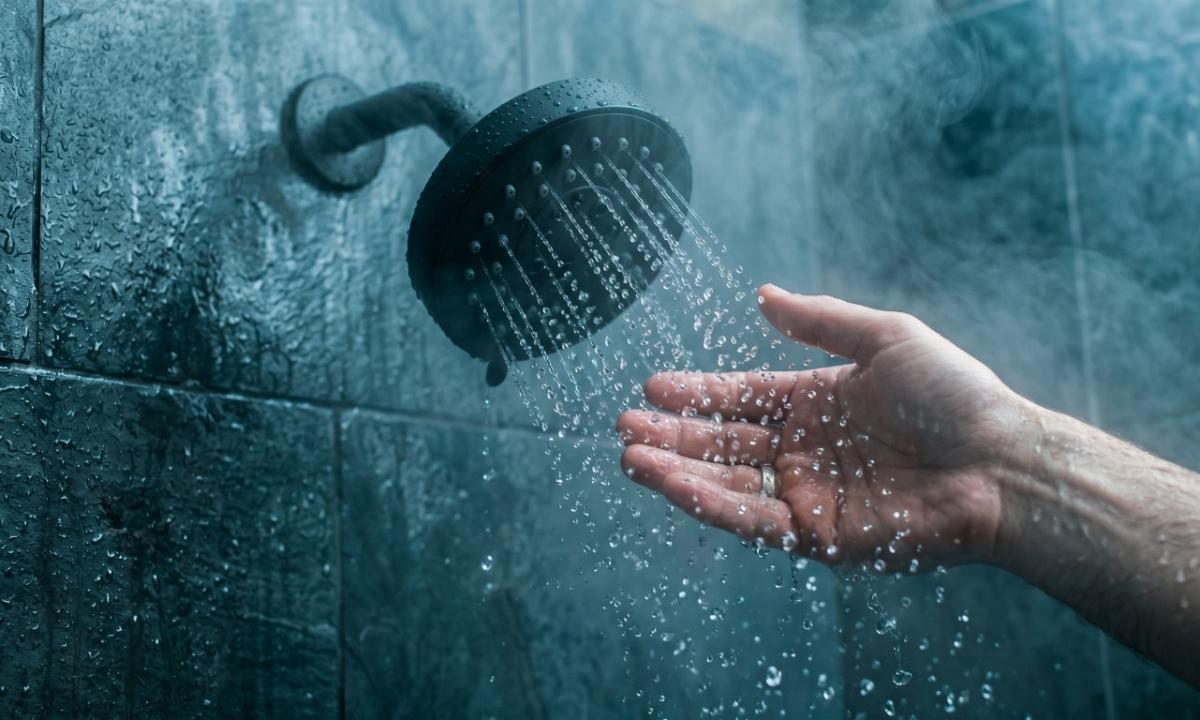
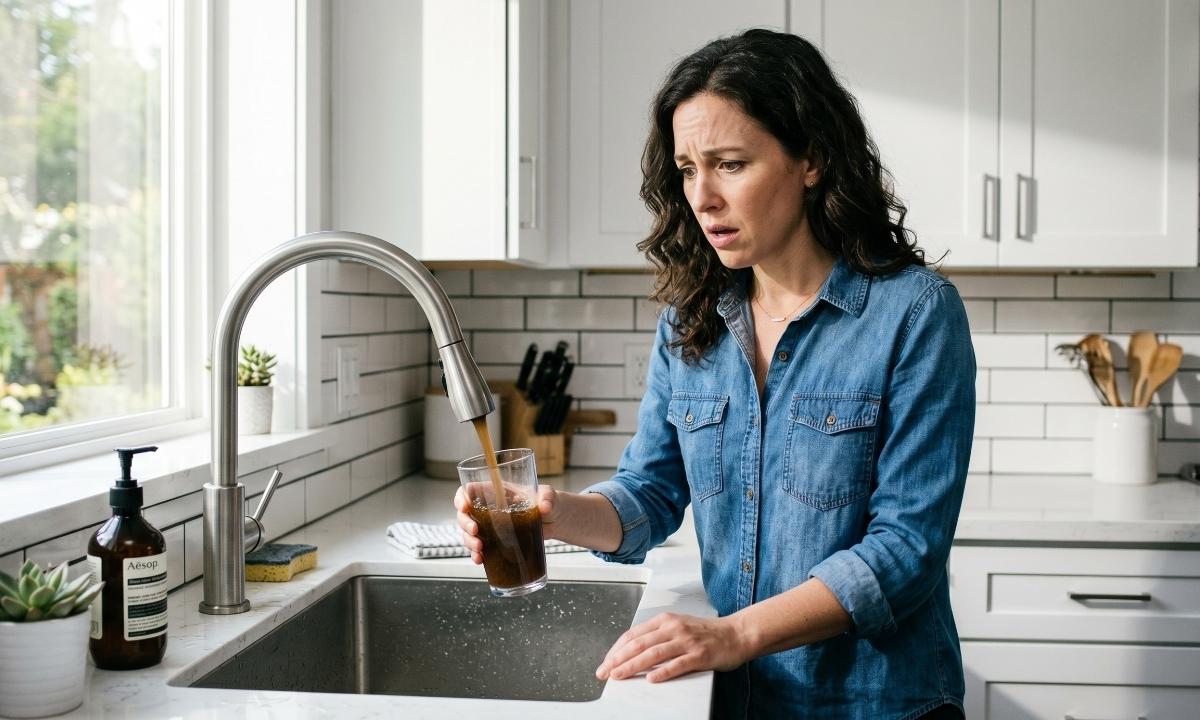
There is nothing quite as frustrating as stepping into the shower expecting a powerful, rejuvenating stream of water, only to be met with a weak, unenthusiastic trickle. If you are struggling with a sudden or gradual loss of water flow, you are not alone. Knowing how to fix low water pressure is a common challenge for homeowners, but the good news is that many of the underlying causes can be resolved with basic troubleshooting.
Whether the issue is isolated to a single kitchen sink or affecting your entire house, restoring your plumbing system to peak performance is essential for your daily comfort. In this comprehensive guide, we will explore exactly what causes low water pressure, how to diagnose the root of the problem, and the step-by-step methods you can use to increase home water pressure. From cleaning clogged fixtures to adjusting valves and identifying hidden leaks, here is everything you need to know to get your water flowing freely again.
Understanding Low Water Pressure in House Systems
Before you grab your toolbox, you need to isolate the problem. The plumbing network in your home is a complex system of interconnected pipes, valves, and fixtures. Diagnosing the issue correctly will save you time, money, and unnecessary frustration.
Is It One Fixture or the Whole House?
The first step in any plumbing diagnosis is determining the scope of the problem. Walk through your home and test every faucet, showerhead, and spigot. Turn them on one by one.
- Isolated Issue: If only your kitchen faucet or the guest bathroom shower is experiencing weak flow, you are in luck. This almost always indicates a localized problem, such as a clogged aerator, a blocked showerhead, or a partially closed supply valve beneath that specific sink.
- Whole-House Issue: If every fixture in the house has weak flow, the problem is systemic. This points to an issue near your water meter, a failing pressure reducing valve, a hidden leak in the main water line, or an issue with your municipal water supply.
Hot vs. Cold Water Pressure
Next, test both the hot and cold water independently at a single fixture. Turn on only the cold water, observe the pressure, and then switch completely to the hot water.
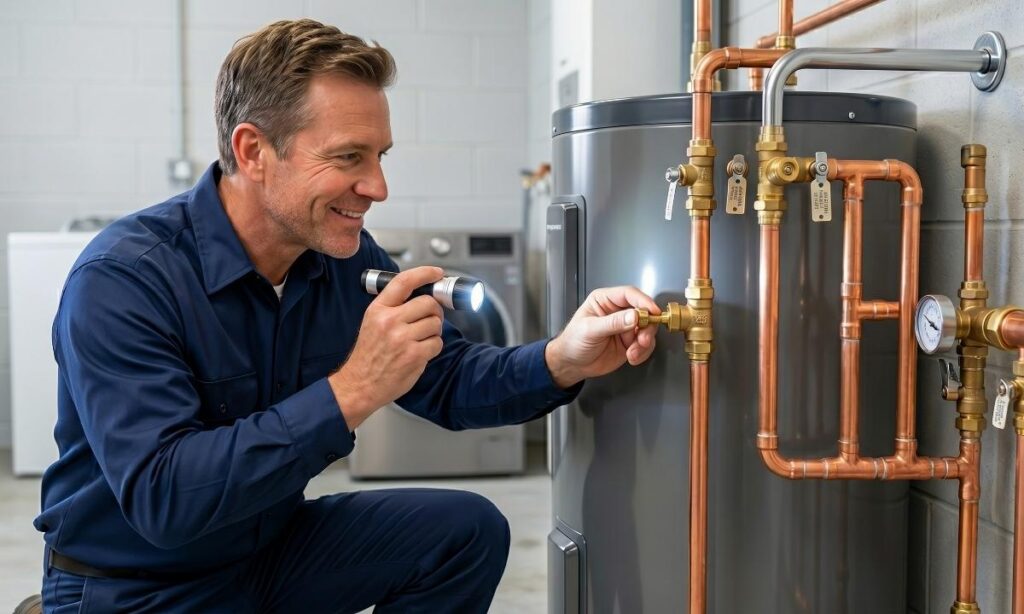
- If the cold water pressure is strong but the hot water is weak, the issue is directly tied to your water heater. It could be a partially closed shut-off valve on the heater, sediment buildup in the tank, or a failing anode rod.
- If both hot and cold water share the same weak pressure, the issue lies in the main supply lines feeding the fixture.
What Causes Low Water Pressure? (The Common Culprits)
To effectively fix low water pressure, you must understand the primary culprits. Over the years, plumbing systems endure significant wear and tear. Here are the most frequent reasons your water flow might be suffering:
- Clogged Aerators and Showerheads: Over time, dissolved minerals in your water supply (like calcium and magnesium) build up inside the tiny screens of your faucets and showerheads, restricting flow.
- Partially Closed Shut-Off Valves: Your home has several valves. If the main house shut-off valve or the water meter valve gets bumped or is not fully opened after a repair, your pressure will drop house-wide.
- Failing Pressure Reducing Valve (PRV): If your home has a PRV to prevent municipal water pressure from damaging your pipes, it can wear out or break. When a PRV fails, it often restricts flow dramatically.
- Hidden Plumbing Leaks: A significant leak in your plumbing system diverts water away from your fixtures. If water is escaping behind your walls or underground, less of it makes it to your sink.
- Pipe Corrosion and Scale Buildup: Older homes with galvanized steel pipes are notorious for internal corrosion. Rust and scale build up inside the pipe, narrowing the diameter and choking off the water supply.
- Municipal Water Supply Issues: Sometimes, the problem isn’t inside your house at all. City water main breaks, routine flushing, or heavy neighborhood demand can temporarily lower your pressure.
How to Fix Low Water Pressure: Step-by-Step DIY Guide
If you are ready to tackle the problem, follow these step-by-step instructions. Many of these solutions require only basic household tools and a little bit of patience.
Step 1: Check Your Main Shut-Off Valve
Your home’s main water supply is controlled by a shut-off valve, typically located in the basement, garage, crawlspace, or on an exterior wall near the foundation. There are two main types of valves:
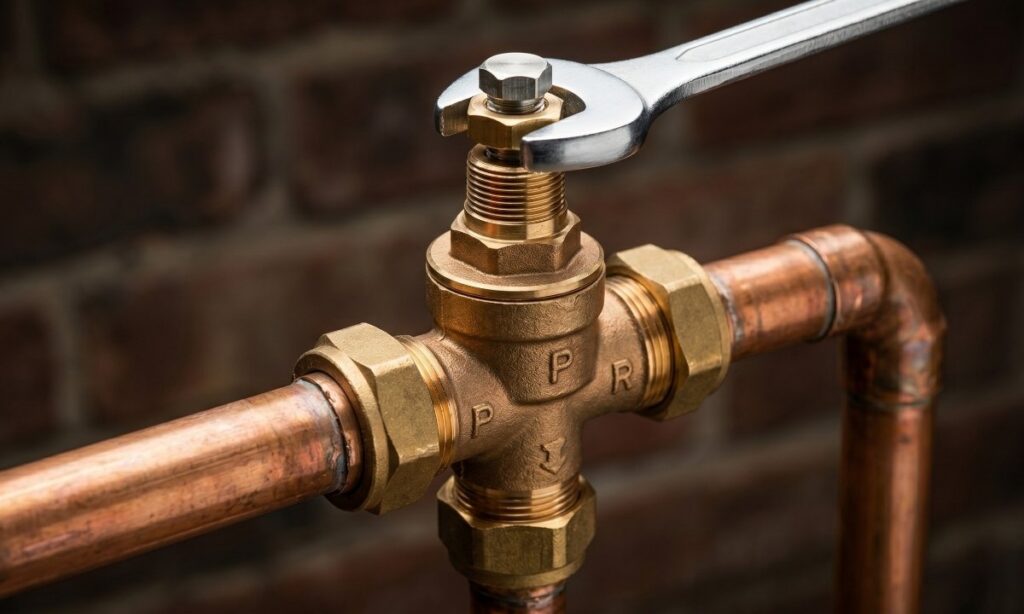
- Ball Valve: This valve has a straight handle. For the water to be fully on, the handle must be completely parallel to the pipe. If it is angled, it is restricting flow.
- Gate Valve: This looks like a circular steering wheel. Turn it counterclockwise as far as it will go to ensure it is completely open.
If you have recently had plumbing work done, there is a high chance this valve was not fully reopened. Adjusting it is the easiest way to immediately increase home water pressure.
Step 2: Clean Your Faucet Aerators and Showerheads
If the low water pressure in house is isolated to a few fixtures, mineral buildup is the likely suspect.
For Faucets:
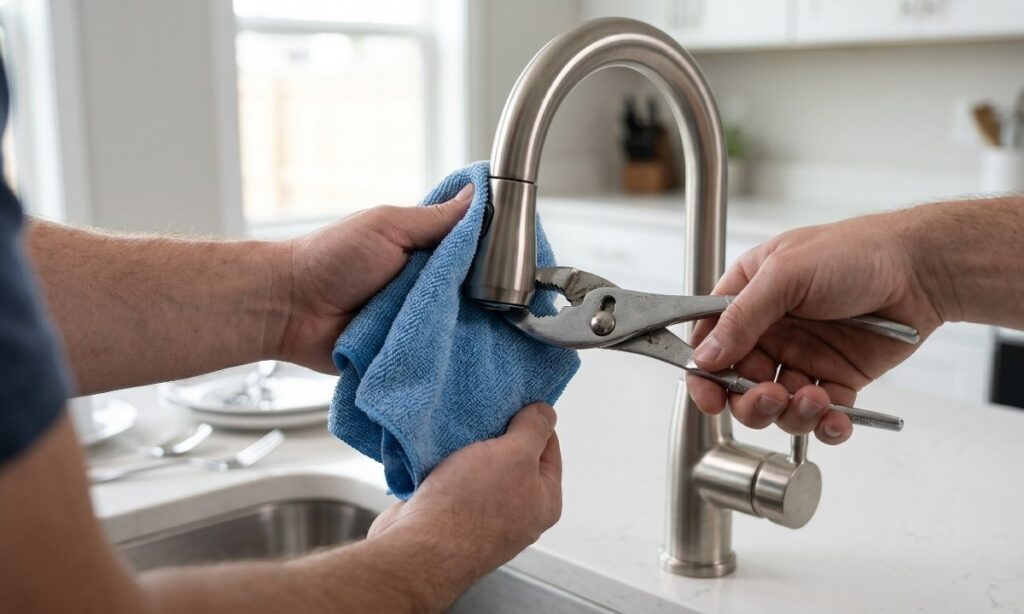
- Wrap a rag around the end of the faucet to prevent scratching, and use a pair of slip-joint pliers to unscrew the aerator (the tip of the faucet) by turning it counterclockwise.
- Carefully disassemble the aerator, noting the order of the screens and gaskets.
- Rinse the parts to remove loose debris.
- Soak the components in a bowl of white vinegar for 2-3 hours to dissolve hard water scale.
- Scrub gently with an old toothbrush, reassemble, and reattach.
For Showerheads:
- Unscrew the showerhead from the shower arm.
- If the mineral buildup is severe, submerge the entire showerhead in a bag of white vinegar. Secure the bag over the showerhead with a rubber band and let it sit overnight.
- Remove the bag, scrub the nozzles with a brush, and run hot water through it to flush out the loosened debris.
Step 3: Inspect the Pressure Reducing Valve (PRV)
The PRV is a bell-shaped device usually installed on the main water line right after it enters your home. Its job is to reduce the high-pressure water from the city into a safe pressure for your indoor pipes (typically between 40 and 60 psi).
When a PRV fails, it can cause a sudden, severe drop in water pressure. While you can sometimes adjust the PRV by loosening the locknut and turning the adjustment screw clockwise to increase pressure, a failing PRV usually needs to be replaced. Because this involves cutting into the main water line, this is typically a job for professional plumbing services.
Step 4: Test for Hidden Plumbing Leaks
Hidden plumbing leaks are a serious cause of pressure loss and can cause devastating water damage if left unchecked. To test if a leak is the source of your problem:
- Turn off all water fixtures inside and outside your home. Ensure no appliances (like washing machines or dishwashers) are running.
- Locate your water meter, which is usually in a concrete box near the street or in your basement.
- Look at the leak indicator dial (often a small red or black triangle or star). If this dial is spinning while all water is shut off, you have a leak.
- Alternatively, write down the meter reading, wait two hours without using any water, and check the reading again. If the number has changed, water is escaping your system.
Step 5: Check Your Water Heater
If your cold water pressure is fine but your hot water flow is weak, head to your water heater.
- Check the shut-off valve on the cold water inlet pipe above the heater to ensure it is completely open.
- If your water heater is old, mineral sediment may have accumulated at the bottom of the tank, blocking the outlet. Flushing the water heater tank is recommended annually to prevent this. If the heater is heavily scaled, you may need a plumber to clear the lines or replace the unit.
Step 6: Look for Mineral Buildup and Pipe Corrosion
If you live in a house built before the 1990s and still have the original galvanized steel pipes, you are likely dealing with interior pipe corrosion. Over decades, rust builds up on the inside walls of the pipes, leaving only a tiny pathway for water to flow through.
Unfortunately, there is no DIY fix or chemical cleaner that can safely remove heavy corrosion from old plumbing. The only permanent solution to this problem is a whole-house repipe, replacing the old steel lines with modern copper or PEX piping.
Step 7: Contact Your Municipal Water Supplier
If you have checked your valves, cleaned your aerators, and ruled out a leak, the issue might not be your house. Call your local water utility company. They can tell you if there is a main break in your area, if they are performing system maintenance, or if they have lowered the neighborhood pressure for other operational reasons.
Comparing DIY Fixes vs. Professional Plumbing Services
Not every plumbing issue is a DIY project. Knowing when to grab a wrench and when to pick up the phone can save you from accidentally flooding your home.
| Plumbing Issue | DIY Difficulty | Estimated Cost to Fix | When to Call a Pro |
| Clogged Aerator/Showerhead | Low | $0 – $10 (for vinegar or new aerator) | If the fixture is stuck or stripped and won’t unscrew. |
| Closed Main Shut-Off Valve | Low | $0 | If the valve is corroded and won’t turn, do not force it. |
| Failing PRV (Pressure Valve) | High | $150 – $350 (part) + Labor | Always. Replacing a main valve requires specialized tools. |
| Hidden Pipe Leak | High | Varies widely based on location | Immediately. Water damage is expensive and dangerous. |
| Galvanized Pipe Corrosion | Extreme | Varies (requires repiping) | Always. Repiping requires professional permits and expertise. |
When to Call LSP Plumbing to Increase Home Water Pressure
While cleaning a showerhead is a simple Saturday afternoon chore, dealing with main water lines, pressure reducing valves, and hidden leaks requires the expertise of a licensed professional. Attempting to force a stuck main valve or replace a PRV without the proper experience can result in broken pipes and severe flooding.
If you have tried the basic troubleshooting steps and are still dealing with a frustrating trickle, it is time to call in the experts at LSP Plumbing. Our experienced technicians have the diagnostic tools necessary to pinpoint exactly what causes low water pressure in your specific system. We can safely test your static and dynamic water pressure, adjust or replace failing PRVs, locate hidden leaks with non-invasive equipment, and provide upfront solutions to restore your home’s water flow.
Frequently Asked Questions (FAQ)
Normal residential water pressure typically falls between 40 and 60 pounds per square inch (psi). Anything below 40 psi will feel weak and may cause appliances like washing machines to run inefficiently. Pressure above 80 psi is too high and can damage your pipes, fixtures, and appliances, leading to premature leaks.
Yes. If you have a whole-house water softener, the resin bed inside the tank can break down over time. When this happens, the resin beads can clog the water lines or the internal valve of the softener, drastically reducing the water pressure throughout your home. You can test this by temporarily putting your water softener into “bypass” mode; if your pressure instantly improves, the softener needs maintenance or replacement.
A sudden, severe drop in water pressure is usually caused by an acute event. The most common reasons include a catastrophic failure of the pressure reducing valve (PRV), a major leak or burst pipe in your home or yard, or an issue with the municipal water main (such as a break down the street). If the drop is sudden, you should immediately check your water meter for signs of a massive leak.
A water pressure booster pump can be an excellent solution if your municipal water supply genuinely delivers water at a low pressure (below 40 psi) to your property line. However, a booster pump will not fix issues caused by clogged aerators, corroded internal pipes, or failing valves. A plumber should always evaluate your system to fix any underlying blockages before recommending a booster pump.
The cost varies greatly depending on the root cause. If the plumber simply needs to clean out a clogged cartridge in a shower valve, it may only cost the standard service call fee. If the issue requires replacing a pressure reducing valve, it can range from $300 to $600. Finding and fixing a hidden slab leak or repiping a home due to pipe corrosion will be a more significant investment.
Conclusion
Dealing with low water pressure in house systems is incredibly aggravating, but it is rarely a mystery. By taking a systematic approach-checking your main valves, cleaning your fixture aerators, testing for leaks, and evaluating your hot water heater-you can identify the source of the problem. Many times, restoring your home’s water flow is a quick DIY fix.
However, your plumbing system is the vital circulatory system of your home. When the problem lies deep within your pipes, stems from a failing main valve, or points to internal pipe corrosion, professional intervention is required to ensure the safety and integrity of your home.
Don’t settle for weak showers and slow-filling washing machines. If you have run through the troubleshooting steps and your water pressure is still lacking, our team is ready to help. Contact LSP Plumbing today for a comprehensive plumbing inspection, and let our licensed professionals restore the powerful, reliable water flow your home deserves!