Seeing water rise rapidly toward the rim of your commode is a heart-stopping moment for any homeowner. A clogged, overflowing toilet can cause thousands of dollars in property damage and introduce harmful bacteria into your living space within minutes. Knowing what to do when your toilet overflows is critical to protecting your home, managing the mess, and restoring order to your bathroom before a minor inconvenience turns into a catastrophic plumbing disaster.
When an emergency strikes, panicking only delays the necessary actions that can save your flooring and subfloors. This comprehensive, step-by-step emergency guide will equip you with the exact strategies needed to stop the flow of water immediately, clear the stubborn obstruction, and properly sanitize the affected area.
The Immediate Emergency Response: Stop the Water Flow
The absolute first thing you must do when a toilet begins to spill over is cut off its water supply. Every second matters during a plumbing crisis, as water can quickly seep through bathroom tiles, saturate baseboards, and ruin the ceiling of the room directly below. Do not wait for the bowl to empty on its own, and do not attempt to flush the toilet again, as this will only add more water to an already overwhelmed basin.
Locating the Shut-Off Valve
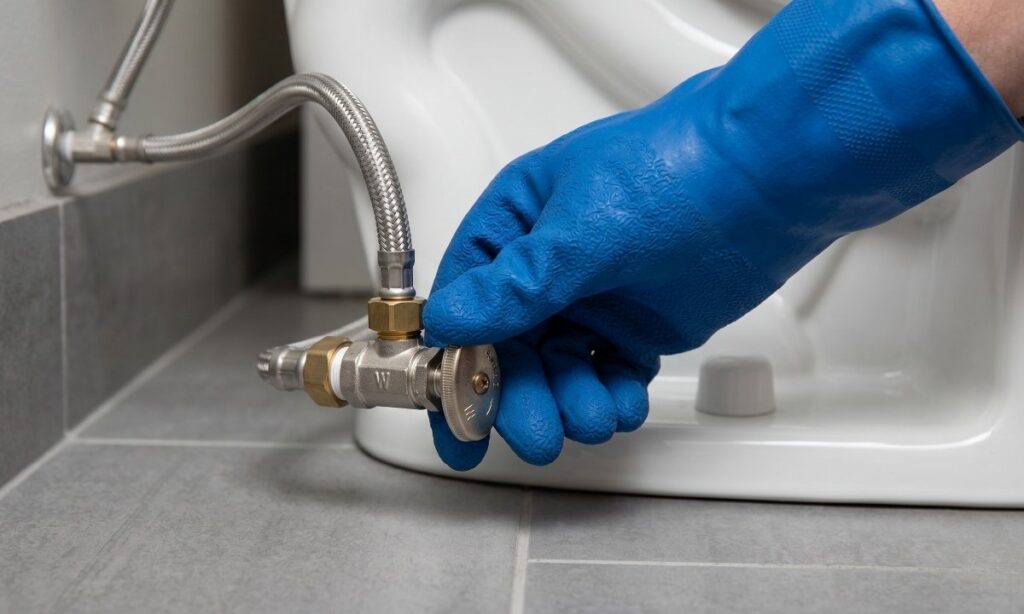
In almost all residential bathrooms, you will find a dedicated water shut-off valve located behind the toilet tank, close to the floor. This valve is typically connected to a flexible metal or plastic supply line that runs directly into the bottom of the toilet fill valve.
To stop the incoming water, turn this valve clockwise (to the right) until it cannot turn any further. Remember the classic phrase: “righty-tighty, lefty-loosey.” If the valve is old, stiff, or difficult to turn, do not force it with excessive violence, as you could snap the pipe and cause a much larger high-pressure leak. Instead, apply firm, steady pressure.
The Backup Method: Adjusting the Float
If your bathroom does not have a local shut-off valve, or if the valve is completely stuck due to mineral buildup, you must act quickly inside the tank itself. Carefully lift the heavy ceramic lid off the top of the toilet tank and set it down flat on a secure surface where it will not chip or crack.
Look inside the tank for the floating mechanism, which is usually either a hollow plastic ball on a metal arm or a plastic cylinder that slides up and down the main fill tube. Manually lift this float arm up as high as it will go. Lifting the float tricks the fill valve into thinking the tank is already full, which immediately commands the mechanism to stop pouring new water into the bowl. Secure the float in this upward position using a piece of wire, a coat hanger, or a tall object wedged underneath it while you address the clog.
Assessing the Root Cause of the Overflow
Once the immediate threat of continuous flooding has been neutralized, you need to understand exactly why the system failed. Toilets overflow due to a fundamental imbalance: more water is entering the bowl than the drain line can successfully carry away. Identifying the underlying cause will dictate the correct choice of tools and methods required for a permanent fix.
| Common Cause | Primary Symptom | Best Immediate Tool | Prevention Strategy |
| Simple Organic Clog | Waste or excess toilet paper stuck in the trapway | Heavy-duty flange plunger | Use less paper; flush twice if necessary |
| Foreign Object Blockage | Toys, wet wipes, or hygiene products lodged in pipes | Toilet auger (plumbing snake) | Keep a wastebasket nearby; educate household |
| Main Sewer Line Backing Up | Multiple drains gurgling; wastewater rising spontaneously | Professional plumbing hydro-jetting | Regular drain maintenance; root treatments |
| Malfunctioning Tank Hardware | Water running constantly; tank failing to fill correctly | Replacement fill valve/flapper | Inspect tank components annually |
Simple Organic Clogs vs. Foreign Objects
The most frequent culprit behind an overflowing toilet is an accumulation of organic waste and excessive toilet paper lodged firmly within the internal S-bend, or trapway, of the ceramic toilet bowl. These obstructions are dense but pliable, making them highly susceptible to traditional plunging techniques.
Conversely, foreign objects represent a much more serious mechanical blockage. Items such as flushable wipes (which do not actually dissolve in water), feminine hygiene products, cotton swabs, paper towels, and children’s plastic toys cannot be broken down by water. If one of these items is accidentally flushed, attempting to clear it with a plunger can frequently shove the object deeper into the household waste lines, creating a stubborn, compacted bottleneck that requires mechanical extraction.
Main Sewer Line Issues
If you notice that water is bubbling or rising up into your toilet bowl even when no one has recently flushed it, or if wastewater backs up into your shower basin or bathtub simultaneously, you are likely dealing with a mainline sewer blockage. This occurs deep within the underground pipes leading away from your home, often caused by invasive tree roots breaking into the pipe joints or a collapsed sewer line. When the main line is blocked, waste from the entire house has nowhere to go, causing it to back up at the lowest open drains, which are typically found in your ground-floor or basement bathrooms.
Step-by-Step Guide to Clearing the Blockage
With the water safely shut off and the cause analyzed, you can begin the process of clearing the drain line. Before you touch any plumbing equipment, protect yourself by putting on thick rubber gloves, safety goggles, and old clothing that you do not mind discarding if it becomes contaminated.
Step 1: Remove Excess Water
If the toilet bowl is filled to the absolute brim with dirty water, attempting to use a plunger will cause contaminated liquids to splash out onto your face, clothes, and bathroom floors. Use a small disposable plastic cup or an old siphon pump to scoop out the excess water into a heavy-duty bucket. Leave enough water in the bowl to completely submerge the rubber head of your plunger, as this water is necessary to create a proper vacuum seal.
Step 2: Select and Prepare the Right Plunger
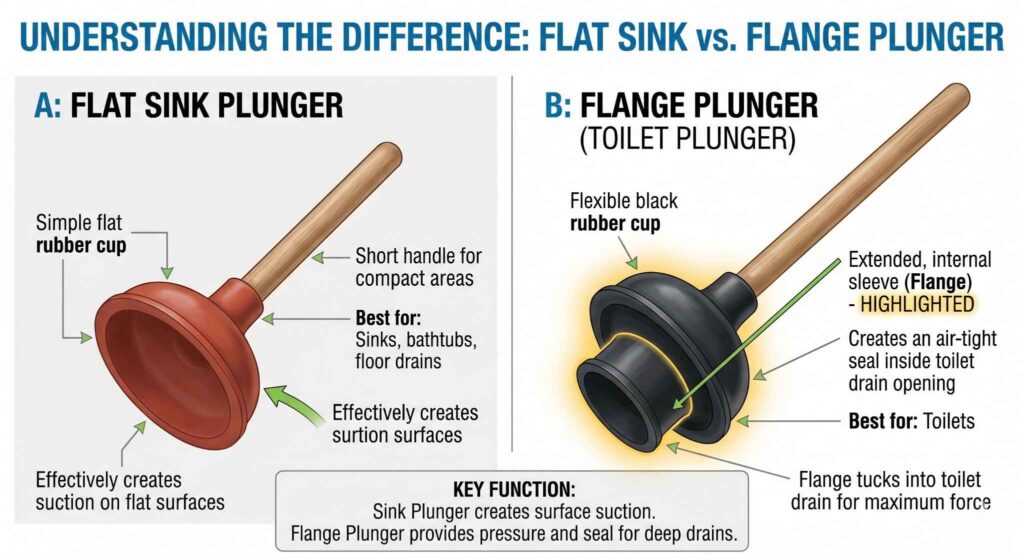
Not all plungers are built the same way. The flat, cup-shaped plungers commonly found in many households are designed specifically for flat sink drains and are highly ineffective inside the contoured, irregular drain opening of a toilet bowl. Instead, you must use a flange plunger (also known as a toilet plunger), which features an extended rubber sleeve or flap protruding from the bottom of the main dome.
Before inserting the plunger into the dirty bowl, run the rubber head under extremely hot tap water in another sink for one to two minutes. The intense heat softens the rigid rubber, allowing it to conform much more easily to the exact shape of the toilet drain, which ensures a tight, airtight seal.
Step 3: Execute the Correct Plunging Technique
Insert the flange plunger into the bowl at an angle so that the cup fills with water rather than trapping a large bubble of air. Press the extended rubber flange firmly into the drain opening until you feel a secure seal form.
Your initial downward stroke should be gentle and deliberate; this pushes the remaining air out of the plunger cup without violently forcing dirty water backward out of the bowl. Once the seal is established, initiate a series of vigorous, rapid push-and-pull motions.
The secret to successful plunging lies in the pull-back stroke. The upward suction is what actually loosens, breaks up, and shifts the clog backward, allowing the natural force of gravity and water pressure to wash it away on the subsequent push. Continue this rhythmic plunging for 15 to 20 seconds before pulling the plunger away completely.
Step 4: Utilize a Toilet Auger for Stubborn Obstructions
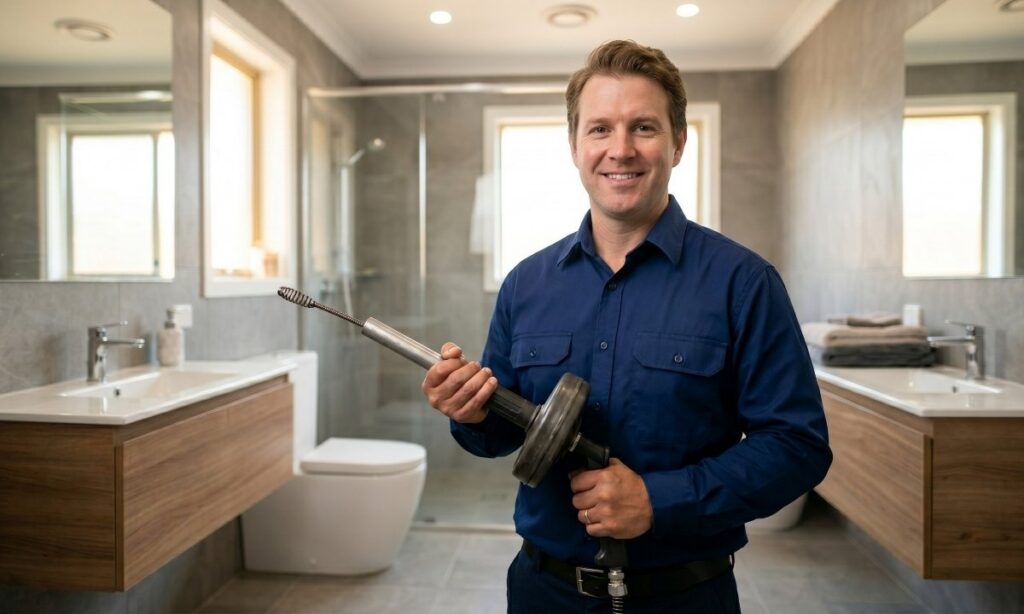
If several rounds of intense plunging fail to budge the blockage, you must graduate to using a toilet auger, also referred to as a plumbing snake. This specialized tool consists of a long, rigid metal rod with a crank handle on one end and a flexible, coiled steel cable running through a protective rubber sleeve at the bottom. The rubber sleeve is a critical feature, as it prevents the raw metal cable from scratching or cracking the delicate porcelain finish inside your toilet bowl.
Pull the auger handle all the way up so that the tip of the spring cable is retracted close to the rubber guard. Insert the curved end of the tool into the bottom of the toilet drain. Slowly turn the crank handle clockwise while pushing downward with firm pressure.
As the flexible spring cable snakes its way through the internal trapway, you will eventually feel distinct resistance; this indicates that you have successfully reached the blockage. Continue cranking the handle to drive the auger tip directly into the obstruction.
If the clog is made of paper or organic matter, the auger will break it apart. If it is a solid object like a cloth or a toy, the hooks on the tip of the cable will snag the item, allowing you to carefully pull the entire assembly out of the drain.
Cleaning and Sanitizing After an Overflow
Once the water drains successfully and the clog is entirely cleared, your job is only half finished. Toilet overflow water is classified by restoration experts as Category 3 black water, meaning it contains highly dangerous pathogens, bacteria, fecal matter, and viruses that pose immediate health risks to humans and pets. Thorough containment, cleaning, and sanitizing are mandatory to keep your household safe.
Step 1: Contain the Spill Immediately
Prevent the dirty water from tracking into adjacent hallways or carpeted rooms by laying down heavy-duty trash bags or plastic sheeting at the bathroom threshold. Place old towels, absorbent rags, or specialized spill mats around the base of the toilet to soak up any standing puddles. If you have access to a wet-dry shop vacuum, you can use it to rapidly extract large volumes of water from tiles, but ensure you clean and disinfect the vacuum tank thoroughly immediately afterward.
Step 2: Apply Professional-Grade Disinfectants
Do not rely on mild soap or standard multi-surface sprays to clean up black water. You need an EPA-registered disinfectant or a strong, freshly mixed bleach solution to kill harmful microscopic organisms. Mix 1 cup of liquid household bleach with 1 gallon of cool water in a bucket.
Generously scrub all contaminated hard surfaces, including the porcelain exterior of the toilet, the floor tiles, the grout lines, baseboards, and nearby wall sections. Allow the disinfectant solution to sit wet on the surfaces for at least 10 minutes to guarantee complete eradication of all lingering pathogens before wiping the area dry with clean paper towels.
Step 3: Deal with Damaged Materials
Any porous materials that have been heavily saturated with toilet overflow water-such as bath mats, small rugs, magazines, or unsealed drywall-should be placed directly into heavy plastic trash bags and discarded immediately. If the water managed to breach your baseboards and soak into the underlying wooden subfloor or drywall, standard home cleaning will not suffice. In these advanced scenarios, you must bring in professional property restoration specialists who utilize industrial air movers and heavy dehumidifiers to dry the structural framing of your home before toxic black mold begins to colonize the damp cavities.
When to Call the Licensed Professionals at LSP Plumbing
While many standard toilet overflows can be resolved using a quality plunger and a bit of determination, certain situations demand the advanced diagnostics and specialized machinery that only a certified professional plumber can provide. Attempting to handle complex, deep-seated plumbing failures on your own can result in broken pipes, flooded homes, and costly structural repairs.
You should contact LSP Plumbing immediately if you experience any of the following warning signs:
- The toilet overflows repeatedly over the course of a few days despite multiple successful plunging attempts, indicating a deep restriction down the line.
- Wastewater backs up into adjacent plumbing fixtures, such as your bathroom sink, shower stall, or washing machine drain, whenever the toilet is flushed.
- You smell strong, foul sewer gas odors permeating through your home’s vents or crawlspaces, which points toward a broken or cracked sewer lateral line.
- The shut-off valve is completely frozen, leaking water continuously around its stem, or refusing to stop the flow of water into the tank during an active emergency.
- You suspect a foreign object is lodged deep within the waste lines beyond the reach of a standard residential toilet auger.
Frequently Asked Questions
A toilet can overflow without an obvious local clog if there is an issue with the tank hardware or a blockage further down the main sewer line. If the internal fill valve fails to shut off after a normal flush cycle, water will continuously pour into the tank. While tanks have an overflow tube designed to route excess water safely into the bowl, if the bowl’s drain is sluggish or slightly restricted, the sheer volume of continuous water will eventually overwhelm the system and spill over.
No, you should never use chemical drain cleaners in an overflowing or clogged toilet. Chemical drain cleaners generate intense exothermic heat reactions to dissolve organic blockages. This concentrated heat can easily crack the delicate porcelain bowl, ruining the fixture permanently. Furthermore, if the chemical fails to clear the obstruction, you will be left with a basin filled with highly toxic, caustic water, making it incredibly dangerous for you or a professional plumber to use a plunger or auger afterward.
If you find yourself without a plunger during an overflow, you can try using a combination of dish soap and hot water. Pour roughly half a cup of liquid dish soap directly into the toilet bowl and allow it to settle to the bottom for 15 minutes to lubricate the pipes. Next, pour a bucket of hot tap water (never boiling water, which cracks porcelain) into the bowl from waist height. The combined weight of the water and the lubricating soap can often break up and push a mild organic clog through the line.
The most effective way to prevent future overflows is to practice mindful flushing habits. Teach household members to only flush organic waste and standard toilet paper. Never flush wipes, paper towels, facial tissues, or dental floss down the drain. Additionally, consider upgrading to a modern dual-flush toilet, keep a trash can right next to the toilet for non-flushable waste, and address slow-draining toilets immediately before they suffer a total blockage.
Conclusion and Next Steps
Dealing with an overflowing toilet is undeniably stressful, but knowing what to do when your toilet overflows empowers you to act decisively and minimize property damage. By quickly turning off the main water valve, properly utilizing a flange plunger or toilet auger, and executing a rigorous sanitation routine, you can successfully navigate the vast majority of household bathroom emergencies.
However, if your toilet continues to drain slowly, backs up regularly, or threatens to flood your home again, do not leave your property at risk. The experienced team of licensed technicians at LSP Plumbing is available to provide rapid, reliable emergency plumbing interventions. Contact LSP Plumbing today to schedule a comprehensive sewer camera inspection and ensure your home’s drainage infrastructure remains completely safe, clear, and functional.