A gurgling sink at 10:00 PM ruins your evening. That slow drain isn’t just annoying; it’s a warning.
Most homeowners treat their plumbing like a bottomless trash can until a massive clog forces a costly emergency repair. Residential plumbing systems are delicate. Pouring the wrong items down your sink triggers structural damage, environmental hazards, and thousands of dollars in plumbing bills.
Protect your home and your wallet. Here is the complete, definitive list of what you must never pour down your drain, along with safe, eco-friendly disposal alternatives.
1. Fats, Oils, and Grease (FOG): The Silent Pipe Killers
Plumbers consider FOG the number one enemy of residential drainage systems. While cooking fats look liquid when hot, they undergo a dangerous physical transformation underground.
How Fatbergs Form
Hot bacon grease and melted butter cling to cool pipe walls instantly. As the fat cools, it solidifies into a waxy, cement-like sludge. This sticky buildup traps passing hair and food scraps, eventually creating a massive, impenetrable blockage known as a “fatberg.”
Keep these fats out of your sink:
- Cooking Oils (Vegetable, Olive, Canola): These sticky oils remain liquid longer but heavily coat the interior of your pipes, restricting water flow.
- Animal Fats (Bacon Grease, Lard, Meat Drippings): These solidify almost instantly upon hitting cool plumbing lines.
- Dairy Products (Butter, Heavy Creams): High fat content contributes significantly to drain buildup.
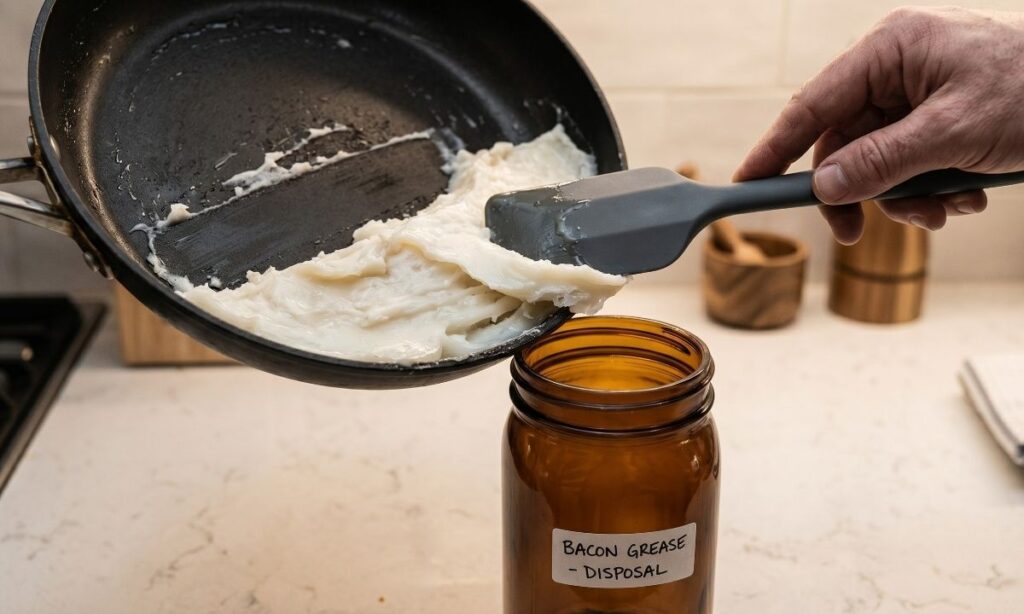
The Right Way to Dispose: Pour hot grease into a glass jar or tin can. Let it solidify, then throw it in the regular trash.
2. Kitchen Culprits: Foods That Destroy Garbage Disposals
Never treat your garbage disposal like a blender. Disposals use impellers to push food against a grind ring, and certain foods will easily bypass this mechanism or destroy the motor.
Starchy “Expandables”
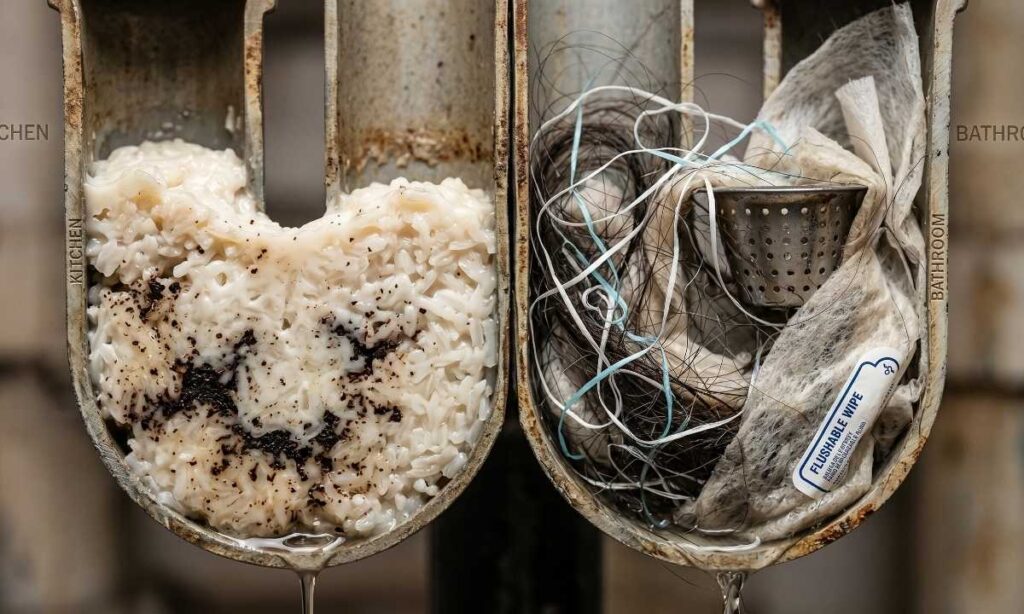
Pasta, rice, and oats naturally absorb water. When tossed down the drain, they continue to swell. A small handful of leftover rice easily doubles in size inside your P-trap, creating a dense plug that blocks water completely.
Adhesive Foods
- Flour: Mixing flour and water creates a thick glue that hardens inside your plumbing.
- Coffee Grounds: Coffee grounds never dissolve. Instead, they settle at the lowest points of your pipes, forming a dense, muddy sludge that requires professional snaking to remove.
Fibrous “Tanglers”
Vegetables like celery, corn husks, onion skins, and potato peels contain tough fibers. These strings wrap tightly around the disposal’s impellers, eventually burning out the motor.
3. Toxic Threats: Hazardous Household Chemicals
While food scraps clog your pipes, harsh chemicals actively destroy them. Your drain connects directly to the local water table, and municipal treatment plants cannot filter out complex industrial compounds.
Corrosive Damage
- Commercial Drain Cleaners: Liquid drain cleaners generate intense heat. Products containing sulfuric acid or sodium hydroxide melt older PVC pipes and accelerate severe corrosion in metal pipes.
- Paint and Thinners: Latex and oil-based paints coat plumbing walls and introduce heavy metals into the water supply.
Chemical Reactions
Mixing household cleaners creates hazardous chemical reactions. For example, pouring bleach down a drain that contains traces of an ammonia-based cleaner produces highly toxic chloramine gas.
The Right Way to Dispose: Store old paint, batteries, and harsh chemicals securely. Drop them off at your local Household Hazardous Waste facility.
4. Bathroom Blockers: Personal Care Products
The bathroom generates the highest volume of emergency plumbing calls. Follow one simple rule for your toilet: Only flush the “Three Ps” (Pee, Poop, and Paper).
The “Flushable” Wipes Myth
Manufacturers market wet wipes as “flushable,” but these synthetic fibers do not disintegrate like toilet paper. While they clear the toilet bowl, they frequently snag in the main sewer line, causing catastrophic sewage backups.
Indestructible Nets
- Dental Floss: Floss is virtually indestructible. It snags on tiny pipe imperfections and acts as a net, catching all other waste.
- Hair: Clumps of hair from shaving or brushing are the primary cause of slow-draining bathroom sinks. Always use a drain strainer.
Medications
Never flush unused prescriptions. Pharmaceuticals pass right through water filtration systems, ending up in local rivers where they disrupt ecosystems and contaminate drinking water.
Smart Solutions: Maintain Your Plumbing the Right Way
Protecting your plumbing requires a few simple habit changes. Implement these preventative measures today:
- Install Mesh Strainers: Place a stainless steel mesh strainer in every sink to catch hair and food particles before they enter the system.
- Use the Baking Soda Flush: Once a month, pour half a cup of baking soda and half a cup of white vinegar down problem drains. Wait 15 minutes, then flush with hot water to clear minor organic buildup naturally.
- Run Cold Water: Always run cold water when operating the garbage disposal. Cold water keeps leftover fats solid, allowing the disposal to grind them up and flush them away.
Protect Your Home’s Plumbing Today
Mindful disposal habits prevent messy chores, preserve your home’s value, and save you from costly emergency repairs. When in doubt, throw it in the trash.
Dealing with a stubborn clog or a sink that won’t drain? Do not risk melting your pipes with store-bought chemicals. Get a safe, permanent solution from the experts.
Contact LSP Plumbing Team Today for a Professional Camera Inspection and Drain Clearing