An underground water leak is one of the most frustrating plumbing problems a homeowner can face. Unlike a dripping faucet or a burst pipe inside your walls, a leak buried beneath your yard or foundation can go undetected for weeks or even months silently wasting water and eroding the ground beneath your property.
So how does a plumber find a water leak underground when there’s nothing to see on the surface? The answer involves a combination of professional-grade detection tools, field experience, and a systematic approach that narrows down the leak’s location without unnecessary excavation. This guide explains everything you need to know: the warning signs to watch for, the methods plumbers use, what the process costs, and how to prevent leaks from happening in the first place.
What Causes Underground Water Leaks?
Understanding why underground leaks happen is the first step toward preventing them. Most buried water line failures don’t occur overnight; they develop gradually due to a combination of age, environmental stress, and installation quality.
Pipe Corrosion and Age-Related Deterioration
Older pipes made from galvanized steel or cast iron are especially vulnerable to corrosion. Over time, mineral deposits in the water, fluctuating pH levels, and the natural acidity of surrounding soil all accelerate oxidation. Once corrosion breaches the pipe wall, even a pinhole-sized opening can release hundreds of gallons of water per day underground.
Tree Root Infiltration
Tree roots are naturally drawn to moisture, and even a minor joint gap or hairline crack in a water line is enough to attract them. As roots grow into the pipe, they widen the opening and can eventually cause a full blockage or structural collapse. This is especially common in older neighborhoods where mature trees have had decades to extend their root systems near buried infrastructure.
Ground Movement and Soil Shifting
Seasonal freeze-thaw cycles, soil erosion, and seismic activity all cause the ground to move. When soil shifts, it places lateral stress on buried pipes. Rigid pipes with soldered or threaded joints are particularly susceptible; even a small displacement can crack a fitting or separate a joint entirely.
High Water Pressure and Poor Installation
Sustained water pressure above 80 psi puts chronic stress on pipe walls and joints. Over time, this weakens the pipe material and accelerates wear at connection points. Pipes that were improperly installed without adequate bedding material, at the wrong slope, or with improper joint sealing are also at much higher risk of early failure.
10 Warning Signs You Have an Underground Water Leak

Underground leaks rarely announce themselves loudly. Most homeowners don’t notice them until the damage is already significant. If that is the case, you need to call a professional for a leak detection service to ensure there are no inner-system leaks.
Sudden Spike in Your Water Bill
If your monthly water bill climbs sharply without any change in your household’s usage habits, a hidden leak is one of the most likely culprits. Even a moderate underground leak can waste thousands of gallons per month. Compare your current bill to the same month in previous years: a 20% or greater unexplained increase warrants investigation.
Pooled Water, Soggy Patches, or Unusually Lush Grass in Your Yard
When water escapes from a buried pipe, it eventually saturates the soil and surfaces somewhere nearby. Look for areas of your yard that stay wet long after rain, or patches of grass that are noticeably greener and growing faster than the surrounding lawn. If you have a leaking sewage line, the nutrient-rich water acts like fertilizer and can cause dense, unusually lush growth directly above the pipe.
Low Water Pressure Throughout Your Home
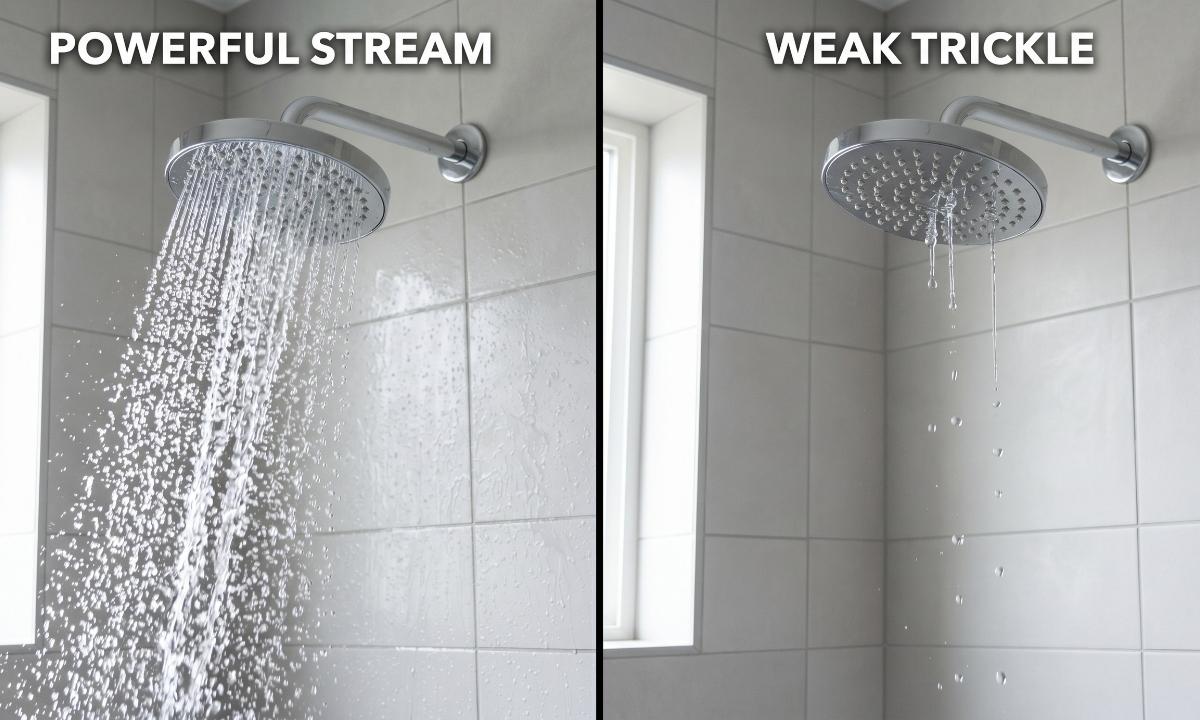
A pressure drop at a single fixture usually points to a localized issue like a clogged aerator. But if every faucet, shower, and outdoor spigot in your home seems weaker than usual, it may indicate that water is escaping from your main supply line before it even reaches your home.
Sounds of Running Water With No Fixtures On
If you hear the faint sound of rushing, dripping, or trickling water when all taps are off, don’t dismiss it. This noise often travels through the ground and into your home’s structure, particularly near the foundation or in crawl spaces. Turn off any appliances that use water and listen carefully near your water meter, utility room, and along exterior walls.
Discolored Tap Water
Brown, reddish, or cloudy water coming from multiple faucets simultaneously can indicate that a corroded pipe has cracked and is allowing soil or sediment to enter the supply line. If only one fixture shows discoloration, the issue may be localized to that fixture’s supply line or aerator — but discoloration across several fixtures is a red flag for an underground problem.
Buckling Pavement, Driveways, or Sidewalks
Water is a powerful erosive force. When a pipe beneath a driveway, walkway, or patio leaks continuously, it gradually washes away the compacted base material underneath. Over time, the surface above loses structural support and begins to crack, heave, or sink. If you notice uneven pavement that wasn’t there before, have a plumber check the water lines in that area.
Foundation Cracks or Shifting Soil Near Your Home
Prolonged soil saturation caused by an underground leak can undermine your home’s foundation. Water weakens the compacted soil that your slab or footings rest on, causing it to shift, erode, or compress unevenly. If you notice new or widening cracks in your foundation, basement walls, or interior drywall, an underground leak may be the root cause.
Warm Spots on Floors or Moist Carpets Indoors
This sign is specific to hot water line leaks beneath concrete slabs — a situation known as a slab leak. When hot water escapes from a pipe embedded in or beneath your foundation, it transfers heat upward through the concrete. If certain spots on your tile or hardwood floor feel noticeably warmer than others, or if carpeted areas feel damp without an obvious cause, a slab leak could be responsible.
How to Check for a Water Leak Yourself Before Calling a Plumber

While professional leak detection equipment is far more precise, there are a few reliable checks you can perform on your own before picking up the phone. These won’t tell you exactly where the leak is, but they can confirm whether one exists and help you narrow down its location.
The Water Meter Test (Step-by-Step)
This is the most reliable DIY method for confirming a leak in your main supply line:
- Turn off every water-using appliance in your home dishwasher, washing machine, ice maker, irrigation system, and all faucets.
- Locate your water meter (usually near the street curb or at the property line) and record the current reading.
- Avoid using any water for at least two hours, ideally two to four hours for the most accurate result.
- Return to the meter and check the reading again. If the number has changed, water has been flowing somewhere which means you likely have a leak.
- Many meters also have a low-flow indicator (a small dial or triangle) that spins even when usage is minimal. If this is moving while all water is off, it’s a strong confirmation of a leak.
The Dye Test for Toilets and Appliances
If you suspect the leak may be internal rather than underground, a simple dye test can rule out common sources. Add several drops of food coloring into your toilet tank (not the bowl). Wait 15 minutes without flushing. If the color appears in the bowl on its own, your flapper valve is leaking a common source of water waste that can mimic underground leak symptoms on your bill.
How to Tell If the Leak Is Inside or Outside Your Home
Once you’ve confirmed a leak with the meter test, you can take one more step to isolate its location. Locate the main shutoff valve inside your home (typically near where the supply line enters the house) and close it. Check the meter again. If the meter has stopped moving, the leak is somewhere inside your home. If it’s still running, the leak is in the supply line between the meter and your house which is underground and will require a professional to locate.
7 Methods Plumbers Use to Find Underground Water Leaks
When a homeowner suspects an underground leak, before any digging or stripping is necessary, plumbers often use a fiber optic camera inspection to identify the exact spot of the problem. Here’s a breakdown of the seven primary tools and techniques used in professional leak detection.
Visual Inspection and Surface Reading
Every professional leak detection job starts with a walk-around. An experienced plumber looks for surface indicators like water pooling, soil erosion patterns, unusually green grass, or soft ground. This initial sweep doesn’t pinpoint the leak, but it gives the plumber a search zone to focus their equipment on which saves time and reduces the overall cost of detection.
Acoustic Leak Detection Devices
Acoustic detection is one of the most widely used methods in the industry. Specialized ground microphones and listening rods are placed directly on the soil surface, pavement, or pipe access points. These devices amplify the sound of pressurized water escaping through a crack or hole, which produces a distinct hissing or rushing noise. By moving the sensor across the suspected area and listening for where the sound is loudest, plumbers can pinpoint a leak to within inches without any digging.
Pressure Testing
To confirm that a leak exists in a specific section of pipe, plumbers may isolate that section and pressurize it with air or water. If the pressure reading drops over a set period, it confirms that the pipe is not holding and that water is escaping somewhere within that section. Pressure testing is especially useful for narrowing down which part of a complex plumbing system is affected before committing to more detailed scanning.
Thermal Imaging Cameras

Thermal imaging (infrared thermography) works by detecting temperature differences on the ground surface. When cold water escapes from a buried pipe, it cools the surrounding soil. Conversely, a hot water line leak creates a warm patch. A thermal imaging camera makes these temperature anomalies visible as color variations on a screen, allowing plumbers to identify leak zones quickly over a large area particularly useful for slab leaks and leaks beneath paved surfaces.
Tracer Gas Detection
For leaks that are too deep or too small for acoustic methods to detect clearly, plumbers may use tracer gas typically a mixture of approximately 95% nitrogen and 5% hydrogen. This inert, non-toxic gas is pumped into the water line under low pressure. Since hydrogen molecules are smaller than water molecules, the gas escapes easily through even the tiniest crack in the pipe. A sensitive handheld sensor is then swept across the ground surface above, detecting where the gas is rising indicating the precise location of the leak.
Soil Probing
When the general area of a leak has been identified but its exact depth and extent are still unclear, plumbers use soil probes slender metal rods inserted into the ground to measure moisture levels at varying depths. By mapping which probe points show elevated saturation, the plumber can determine how far the leak has spread laterally and how deep the affected pipe is buried. This information is critical for planning an excavation that is as small and targeted as possible.
Ground-Penetrating Radar (GPR)
Ground-penetrating radar is the most technologically advanced method in a plumber’s detection toolkit. GPR units emit radar pulses into the ground and record how those pulses reflect off subsurface objects and voids. The result is a real-time cross-sectional image of what lies beneath the surface including pipe locations, soil anomalies, and water-saturated zones. GPR is particularly valuable for large properties, under-slab systems, or situations where multiple utility lines run close together and acoustic methods cannot isolate the source. Not all plumbing companies own GPR equipment, so if this level of diagnosis is needed, ask specifically whether your provider offers it.
What to Expect During a Professional Leak Detection Service
Many homeowners hesitate to call a plumber because they’re not sure what the process involves or whether it will mean tearing up their yard. Underground leaks are high-priority issues. If you notice sudden flooding, don’t wait; contact a 24/7 emergency plumbing team immediately.
How Long Does Leak Detection Take?
For most residential properties, a professional leak detection appointment takes between one and three hours. Simple cases where the leak is producing obvious surface signs and is accessible from above may be resolved in under an hour. More complex situations, such as a leak beneath a concrete slab or a large property with multiple supply lines, can take a half day or longer, especially if GPR scanning is required. Your plumber should give you a time estimate before beginning work.
Will the Plumber Need to Dig Up My Yard?
Modern non-invasive detection technology means that in most cases, the plumber can pinpoint the leak location without any digging at all. Excavation only becomes necessary once the leak has been located and it’s time to actually access and repair the pipe. At that point, a targeted excavation is made directly above the leak, typically a small, precise opening rather than a wide trench. Some repairs can also be completed using trenchless methods, which involve inserting a pipe liner or new pipe section through access points at either end, eliminating the need for surface excavation entirely.
Understanding Your Leak Detection Report
After completing the detection process, a professional plumber should provide a clear summary of their findings. This typically includes the suspected location of the leak (often marked on a diagram or photograph of your property), the depth of the affected pipe, a description of the probable cause, and a recommended repair approach with associated costs. If you plan to file a homeowners insurance claim, this documentation is important: save it and request a written copy before the plumber leaves.
How Much Does Underground Leak Detection Cost?
Cost is one of the most common questions homeowners have before scheduling a leak detection service and it’s one that competing resources rarely address. Some modern repairs can be completed via trenchless sewer installation, which uses ‘cured in place piping’ to fix the line without destroying your yard. Here’s a realistic breakdown of what you can expect to pay.
Factors That Affect Leak Detection Pricing
The cost of professional underground leak detection typically ranges from $150 to $600 for a standard residential service call, depending on several variables:
- Property size: Larger properties with longer supply lines take more time to scan.
- Detection method required: Visual inspection and acoustic detection are less expensive than thermal imaging or GPR, which require specialized equipment.
- Leak depth and accessibility: A leak six inches below the surface is easier and cheaper to detect and repair than one buried four feet under a concrete driveway.
- Geographic location: Labor and overhead rates vary significantly by region.
- Emergency or after-hours service: After-hours and weekend calls typically carry a premium surcharge.
Repair Cost Estimates by Leak Type and Location
Detection and repair are billed separately. Once the leak is located, repair costs will depend on the extent of the damage and the method required to fix it:
- Simple pipe joint repair in an accessible location: $200 to $500
- Underground supply line repair with targeted excavation: $500 to $1,500
- Slab leak repair (traditional excavation method): $1,500 to $4,000+
- Trenchless pipe lining or pipe bursting: $3,000 to $8,000 depending on pipe length
These ranges are estimates that always request a written quote after the leak has been detected and before any repair work begins.
Does Homeowners Insurance Cover Underground Water Leaks?
Whether your homeowners insurance covers an underground water leak depends heavily on the cause of the leak and the specific language in your policy. Most standard policies cover sudden and accidental damage for example, a pipe that ruptures without warning. However, damage resulting from gradual leaks, poor maintenance, or normal wear and tear is typically excluded. Coverage for the cost of excavation and replacing landscaping varies by policy. Contact your insurer as soon as you suspect a leak, document everything with photos and the plumber’s written report, and review your policy’s water damage exclusions carefully before assuming coverage.
How to Prevent Underground Water Leaks
The best underground water leak is the one that never happens. While no plumbing system lasts forever, a proactive maintenance approach can significantly extend the life of your buried pipes and catch problems before they become emergencies. Finding and fixing hidden leaks is a key part of our water conservation tips, helping you lower your monthly bills and protect the environment.
Regular Plumbing Inspections and Maintenance Schedules
Schedule a professional plumbing inspection every two to three years or annually if your home is more than 30 years old. During these visits, a plumber can assess pipe condition, check for early signs of corrosion, test water pressure, and inspect visible connections and shut-off valves. Some plumbers also offer video pipe inspection, where a waterproof camera is threaded through your pipes to look for cracks, root intrusion, and buildup all before a leak develops.
Installing a Smart Leak Detection System
Whole-home water monitoring devices are now widely available and relatively affordable. These systems attach to your main supply line and continuously measure flow rates and pressure. If the system detects abnormal water flow for example, water running for an extended period when no fixtures are in use it sends an alert to your smartphone and, in many models, automatically shuts off the water supply to prevent further damage. For homeowners with older plumbing or a history of leak issues, these devices offer significant peace of mind.
Landscaping and Irrigation Practices That Protect Your Pipes
Before planting trees or large shrubs, research their mature root spread and avoid placing them directly above or adjacent to your buried water lines. As a general rule, keep large trees at least 10 feet away from main supply lines, and further if the species is known for aggressive root growth. If you have an irrigation system, have it inspected annually and adjusted for proper pressure, irrigation lines buried in shallow trenches are among the most common sources of minor underground leaks.
Pipe Materials and Knowing When to Upgrade
Not all pipe materials age equally. Galvanized steel pipes, commonly used in homes built before the 1960s, have a typical lifespan of 40 to 70 years and are highly prone to corrosion and internal buildup. Copper pipes last 50 to 70 years but can be affected by acidic water and soil chemistry. Modern PVC and PEX pipes are highly corrosion-resistant and can last 50 to 100 years under normal conditions. If your home still has its original galvanized or cast iron supply lines, consult a plumber about whether repiping either partially or fully makes sense as a preventive investment.
Frequently Asked Questions
Plumbers use a combination of methods depending on the suspected location and depth of the leak. The process typically begins with a visual inspection of the yard and surface, followed by acoustic detection devices that listen for the sound of escaping water. If the leak is difficult to pinpoint acoustically, thermal imaging cameras, tracer gas sensors, or ground-penetrating radar may be used. These tools allow plumbers to identify the exact location of the leak without excavating the entire pipe run.
No. Underground water leaks do not resolve on their own. Even if a leak slows temporarily due to soil pressure partially blocking the opening, for example the pipe is structurally compromised and will continue to worsen over time. Soil erosion, root growth, and continued water pressure all work against any self-sealing. A leak that appears to have stopped is still an active problem that requires professional repair.
In most of the United States, residential water service lines are buried between 12 inches and 4 feet below the surface. The required depth varies by region and is primarily determined by the local frost line, the depth at which the ground freezes in winter. In southern states with mild winters, 12 to 18 inches is common. In northern states with harsh winters, pipes must be buried below the frost line, which can be 4 to 6 feet in some areas. Your local building department can provide the specific requirement for your location.
Yes. Slab leaks leaks in pipes embedded in or running beneath a concrete foundation are a specialty area of leak detection. Acoustic listening devices can detect the sound of water moving through concrete, and thermal imaging cameras are particularly effective at identifying the warm or cool spots that slab leaks create on the floor surface above. Once the leak is pinpointed, repair options include targeted jackhammering, pipe rerouting through the walls, or trenchless pipe lining.
The consequences of ignoring an underground water leak compound over time. In the short term, you’ll see rising water bills and reduced pressure. Over weeks and months, continuous soil saturation weakens the ground beneath driveways, patios, and your home’s foundation leading to cracking, heaving, and in severe cases, structural damage. Mold and mildew can develop in crawl spaces and against foundation walls. And depending on the source of the leak, there may also be contamination risks to your water supply. The cost of remedying an untreated leak grows dramatically the longer it’s left unaddressed.
Conclusion
Underground water leaks are invisible by nature but they leave plenty of clues if you know where to look. From an unexplained jump in your water bill to warm patches on your floor or buckling pavement in your driveway, the warning signs are there for homeowners who are paying attention.
When it comes to actually finding a leak beneath the surface, today’s plumbers have a powerful toolkit at their disposal: acoustic listening devices, thermal imaging cameras, tracer gas sensors, and ground-penetrating radar all allow precise leak detection without tearing up your property unnecessarily. And in many cases, once the leak is found, trenchless repair methods mean the fix is far less disruptive than homeowners expect.
The single most important thing you can do is act quickly. Every day an underground leak goes unrepaired is another day of water waste, rising costs, and escalating structural risk. If you’ve noticed any of the warning signs described in this guide, use the water meter test to confirm your suspicion then call a licensed plumber for a professional assessment.
A reputable leak detection specialist will locate the problem efficiently, provide a clear written report, and walk you through your repair options giving you the information you need to make a confident decision about protecting your home.
If you’ve noticed any of these warning signs, reach out for professional plumbing repair in Los Angeles to get a free estimate and solve the problem before it escalates.