A slow drain is an inconvenience. A completely blocked drain is a headache. And when a plunger fails to move things along, most homeowners feel stuck. The good news: knowing how to use a plumbing snake is a straightforward skill that can save you a service call, protect your pipes, and get your drain flowing again in under an hour. This guide covers everything from choosing the right tool to clearing the clog and preventing the next one.
What Is a Plumbing Snake (and How Does It Work)?
A plumbing snake is a long, flexible metal cable wound around a central spool. One end feeds into your drain pipe, and the other connects to a hand crank or motor that drives the cable forward. As the cable advances, a coiled or corkscrew-shaped tip at the leading end works its way through bends in your plumbing until it reaches whatever is blocking the flow. The user then rotates the cable to either break up the obstruction or latch onto it so it can be pulled free.
The tool works because it combines reach with rotational force two things a plunger simply cannot provide. While a plunger pushes pressurized air against a clog, a snake makes physical contact with it, which is far more effective for stubborn or deep blockages.
Key Parts of a Plumbing Snake Explained
Understanding the parts of your snake makes it easier to use correctly:
- Cable (auger wire): The flexible metal line that travels through your pipes, typically 15 to 50 feet long.
- Corkscrew/spring tip: The business end of the snake. It snags soft material like hair or grease buildup.
- Drum/spool: The housing that stores the coiled cable and controls how much is fed into the drain.
- Thumbscrew: A locking mechanism on the drum that holds the cable in place during rotation.
- Handle/crank: Turns the cable, either manually or via an electric motor on powered models.
Plumbing Snake vs. Drain Auger – What’s the Difference?
The terms “plumbing snake” and “drain auger” are often used interchangeably at the consumer level, but there is a meaningful distinction worth understanding. The hand-held plumbing snake available at your local hardware store is designed for interior use accessing clogs through sink drains, tub drains, and toilets from inside your home. Professional drain augers, by contrast, are much larger machines used to access the main sewer line from exterior cleanout ports. These commercial tools can have hoses several inches in diameter and are often equipped with cameras that allow plumbers to visually identify and locate blockages. When a plumber arrives at your home, they are almost certainly bringing a professional auger, not the same device you’d find on a store shelf.
What a Plumbing Snake Can and Cannot Do
A plumbing snake is highly effective for:
- Soft clogs caused by hair, soap scum, grease buildup, or food particles
- Blockages located anywhere from a few inches to 50 feet down the drain line
- Obstructions that can be physically snagged, broken up, or pulled free
However, it is important to know what a snake cannot do:
- It cannot retrieve hard objects like jewelry or small toys the tip will simply push them further or slide past
- It cannot cut through solid obstructions like tree roots infiltrating a sewer line
- It cannot repair or diagnose cracked or collapsed pipes
Types of Plumbing Snakes and When to Use Each
Not all plumbing snakes are built the same, and reaching for the wrong type can make the job harder or even damage your fixtures. Understanding the differences before you buy or rent will save you time and frustration.
Cable Auger (Hand Snake) – Best for Sinks and Showers
The cable auger, sometimes called a drum auger or hand snake, is the most versatile consumer option. It stores the cable inside a circular drum and feeds it into the drain via a hand crank. Cable augers are ideal for kitchen sinks, bathroom sinks, and shower drains. Most consumer models offer cable lengths between 15 and 25 feet, which is sufficient for the vast majority of household clogs. For particularly stubborn sink drain clogs, accessing the drain through the removed P-trap (rather than the drain opening itself) makes it easier to navigate the cable into the pipe without fighting the trap’s curve.
Closet Auger (Toilet Auger) – Best for Toilets
A closet auger also called a toilet auger is purpose-built for clearing toilet clogs and should never be substituted with a standard cable auger. The key difference is its protective rubber sleeve, which prevents the metal cable from scratching the interior porcelain of the toilet bowl. The cable is housed within a rigid shaft and features a pre-angled tip specifically designed to navigate the toilet trap. To use it, you insert the end of the sleeve into the bowl opening, keep the tip angled upward toward the trap, and crank the handle to feed the cable in. Once fully extended, reel it back while simultaneously lifting the shaft to help retrieve the obstruction.
Manual vs. Electric Snakes Which Do You Need?
For most homeowners dealing with a typical sink or shower clog, a manual hand snake is perfectly adequate and far less expensive. Electric drain snakes, however, are worth considering in specific situations. If you are dealing with a bathtub clog, an electric snake is significantly easier to work with because the tub’s trap is not directly accessible, meaning you are feeding the cable through the overflow opening and around a tight curve — a task that requires more rotational torque than most people can comfortably generate by hand. Electric snakes are also preferable for longer cable runs or particularly dense clogs. If you do not own one, many home improvement retailers rent both manual and electric snakes by the day at reasonable rates.
Where to Buy or Rent a Plumbing Snake (and What It Costs)
Consumer-grade manual drain snakes are available at hardware stores and online retailers, with prices typically ranging from $20 to $60 for a basic 15-to-25-foot model. Mid-range options with longer cables or sturdier drums run $60 to $150. Electric drain snakes purchased for home use generally start around $150 and go higher depending on cable length and motor power. If this is a one-time job, renting makes more financial sense most hardware rental counters charge between $20 and $50 per day for a manual snake and $40 to $80 per day for a powered unit. A toilet auger specifically is an inexpensive addition to any homeowner’s toolkit at roughly $20 to $40, and it is well worth keeping one on hand.
When Should You Use a Plumbing Snake?
Knowing when to reach for a snake versus other tools can save you effort and prevent you from making a clog worse. The decision point is usually pretty clear once you know what to look for.
Signs Your Clog Is Beyond What a Plunger Can Handle
A plunger works by creating suction and pressure effective for clogs that are close to the drain opening and loosely packed. If you have been working a plunger for several minutes without results, the clog is likely one of the following:
- Located deeper in the pipe than suction can reach
- Too compact or dense to be dislodged by pressure
- A tightly tangled mass (such as a dense hair clump) that needs to be physically grabbed and removed
Other signs it’s time to snake include water backing up in multiple fixtures simultaneously, persistent gurgling sounds after flushing, or a drain that clears very slowly after minor use.
What Types of Clogs a Snake Can Fix (and Which It Can’t)
Plumbing snakes perform best against organic, soft clogs, the most common type in residential drains. Hair accumulation in shower drains, grease and food particle buildup in kitchen sinks, and soap scum deposits in bathroom sinks all respond well to snaking. These materials either break apart under the rotational force of the corkscrew tip or become entangled in it and get pulled out. Where snakes fall short is against solid, rigid obstructions: a child’s toy lodged in a toilet, a ring that slipped into the sink, or tree roots that have grown into the sewer line. Attempting to snake a hard object can drive it further into the pipe and complicate the removal significantly.
How Far Down Can a Plumbing Snake Reach?
Consumer cable augers are typically available in 15-foot and 25-foot lengths, with some models offering up to 50 feet of cable. Most household drain clogs occur within the first 15 to 25 feet of pipe, which means a standard consumer model handles the majority of situations you are likely to encounter. If you have fed the cable to its full extension without making contact with any obstruction, the clog is either beyond the snake’s reach or located in the main sewer line both situations that call for a licensed plumber with professional-grade equipment.
Before You Start – Tools, Materials, and Safety
Taking a few minutes to prepare before you begin will make the job easier, cleaner, and safer. Snaking a drain is not a particularly hazardous task, but there are real risks involved that are easy to overlook.
What You’ll Need (Tools and Materials Checklist)
- Plumbing snake (cable auger or closet auger, depending on the drain)
- Safety glasses
- Rubber gloves
- Old towels or rags
- Shallow bucket or bowl (to catch water from the P-trap)
- Adjustable wrench or slip-joint pliers (for removing the P-trap if needed)
- Flat-head screwdriver (for removing shower drain covers)
- Paper towels or disposable cloth (for debris removal from the cable)
Essential Safety Precautions Before Snaking a Drain
Safety is a step that most how-to guides skip over, but it genuinely matters here. Keep the following in mind:
- Wear safety glasses. When you retract the snake, water and debris can splatter unexpectedly especially if standing water has accumulated in the pipe.
- Wear rubber gloves. The cable will be coated in bacteria-laden debris, hair, and grease. Protect your skin.
- Never pour chemical drain cleaners before snaking. If the drain is backed up and you snake through pooled chemical cleaner, you risk splashing caustic liquid onto your skin and eyes. Chemical cleaners can also corrode older pipes over time.
- If the drain contains standing water with an existing cleaner in it, flush thoroughly with plain water first before inserting the snake.
How to Prep Your Drain (Removing the P-Trap and Drain Covers)
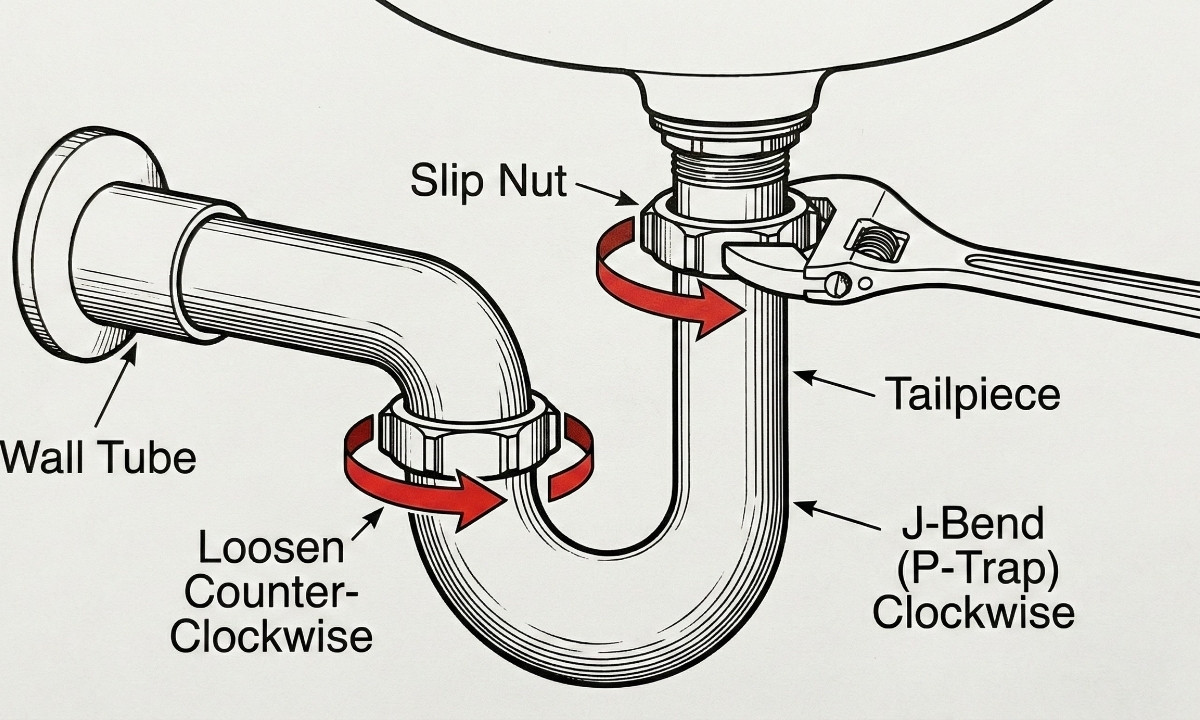
For sink drains, removing the P-trap before snaking is strongly recommended. The P-trap is the curved section of pipe beneath the sink shaped like a “P” on its side and it exists to hold water as a barrier against sewer gases. It also happens to be the most common location for clogs, and removing it gives you two advantages: you may find and clear the clog right there without snaking at all, and if the clog is deeper, you can insert the snake directly into the pipe beyond the trap, avoiding the awkward angle. Place your bucket beneath the trap, unscrew the plastic slip nuts by hand (or with a wrench for older metal fittings), and set the trap aside. For shower drains, use a flat-head screwdriver to remove the screen or cover. For bathtub drains, access is through the overflow plate, which is removed with a screwdriver.
How to Use a Plumbing Snake Step-by-Step Instructions
The process varies slightly depending on which type of drain you are working on. Follow the appropriate set of steps below for your specific situation.
How to Snake a Sink Drain
- Remove the P-trap as described above and place a bucket underneath to catch any residual water.
- Thread the first few inches of cable manually into the drain pipe opening by hand. This keeps the tip stable and guided as you begin cranking.
- Tighten the thumbscrew on the drum to secure the cable, then begin turning the handle clockwise at a slow, consistent pace. Avoid cranking too quickly, as excess slack in the cable can cause it to buckle inside the pipe.
- Feel for resistance. When the corkscrew tip contacts the clog, you will notice the crank becoming harder to turn and the cable will stop advancing freely.
- Rotate the snake against the clog. Continue cranking to drive the tip into the obstruction. The goal is to either break it into small enough pieces to flush away, or to entangle it so it can be pulled out.
- Loosen the thumbscrew and retract the cable slowly. Pull straight back do not rotate during retraction, as this can release whatever you have snagged. If the snake is stuck, lock the drum and reverse the direction briefly while slowly withdrawing.
- Remove debris from the tip using a paper towel or disposable cloth. Twist the material counterclockwise to slide it off the corkscrew.
- Repeat if necessary, then reassemble the P-trap. Run the faucet at full force for two minutes to flush any remaining debris and confirm the drain is clear.
How to Snake a Shower or Bathtub Drain
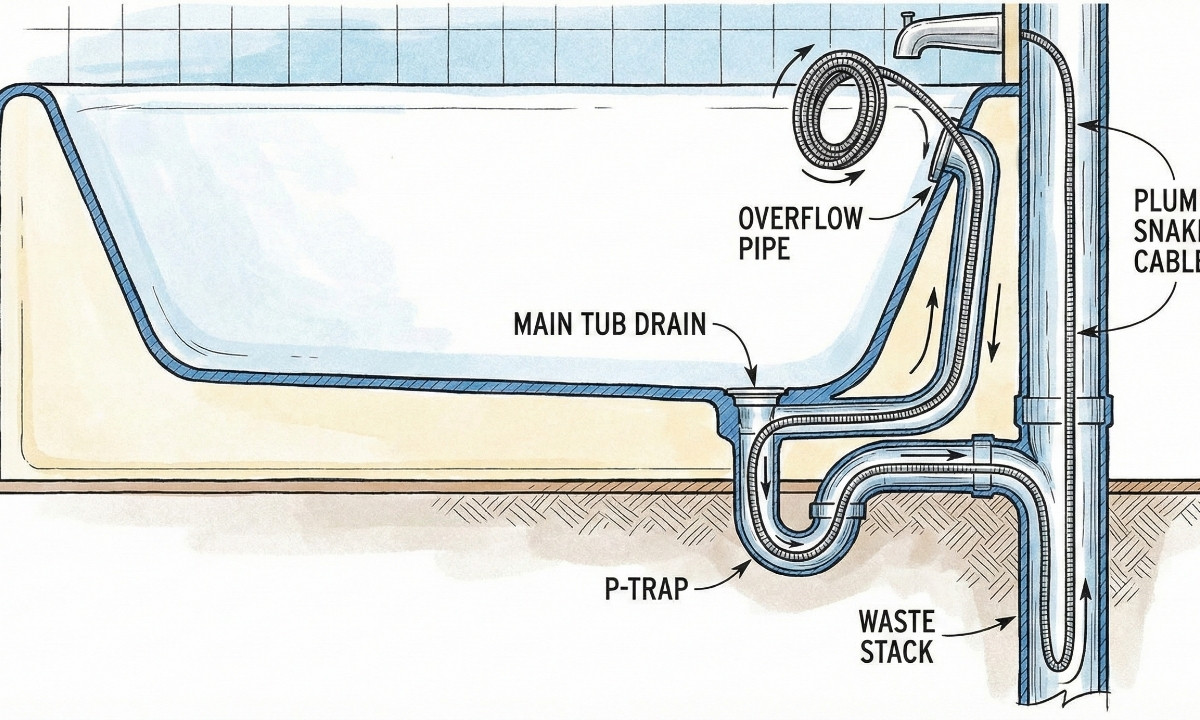
Shower drains and bathtub drains require slightly different approaches due to their trap configurations.
For shower drains: Remove the drain screen or cover with a screwdriver. The P-trap beneath a shower is not directly accessible, so you will feed the snake cable directly through the drain opening. Take your time working the cable around the trap rushing here can cause the cable to kink. Once through, proceed as you would for a sink drain: advance to the clog, rotate to attach, and retract.
For bathtub drains: Access is through the overflow opening, which is the round plate at the upper end of the tub near the faucet. Remove the screws holding the overflow plate, pull it away, and insert your snake cable into the pipe behind it. Because of the sharp bend involved, an electric snake is significantly easier here. Feed the cable in, advance to the obstruction, rotate to break it up or snag it, and retract. Reattach the overflow plate when finished and run water to test flow.
How to Snake a Toilet with a Closet Auger
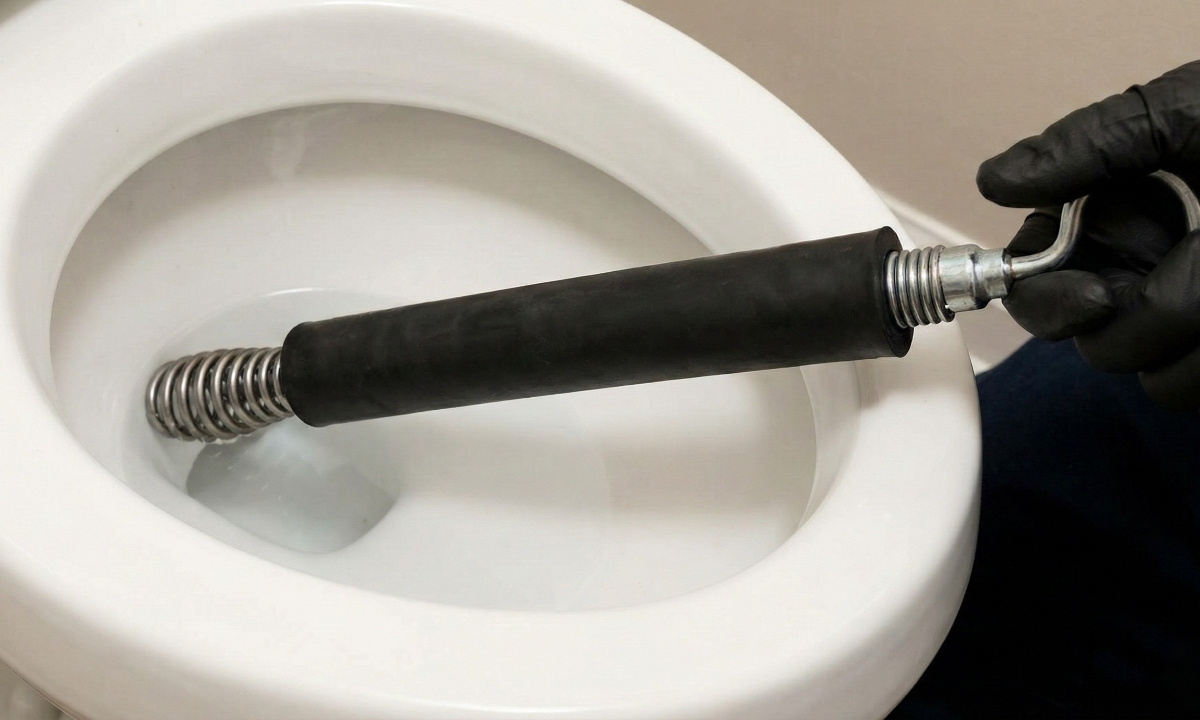
- Position the auger so the end of the rubber sleeve sits in the bowl opening, angled upward toward the trap.
- Hold the shaft steady with one hand and slowly crank the handle with the other to advance the cable down into the trap.
- Once the cable is fully extended, crank it back in while simultaneously lifting the entire shaft upward. This motion helps retrieve the clog rather than just pushing it.
- Flush the toilet to test. If the water flows freely, you have cleared the clog. If not, repeat the process two or three more times before considering whether a plumber is needed.
How to Test Your Drain After Snaking
Before reassembling anything, run the snake through the pipe one more time without resistance as a confirmation pass. If it travels freely to its full length, the obstruction is gone. Then reassemble all fittings (P-trap, drain cover, overflow plate) and tighten connections snugly hand-tight plus a quarter turn is sufficient for plastic fittings, avoiding over-tightening that can crack the threads. Run hot water at full force for one to two minutes. The water should drain at a normal rate without backing up or pooling. If it drains slowly but not as blocked as before, there may be a partial clog remaining and repeat the snaking process before concluding.
How to Clean and Maintain Your Plumbing Snake After Use
Most homeowners who own a plumbing snake make the mistake of retracting it into the drum immediately after use. This is a step that significantly shortens the tool’s lifespan and spreads bacteria and debris inside the drum housing. Taking five minutes to properly clean and store your snake will keep it functioning reliably for years.
Removing Debris from the Cable Safely
After retracting the cable, lay it out on old towels or hold it over a utility sink. Put on your gloves if you have not already done so. Using paper towels or a disposable rag, run your hand along the cable from tip toward the drum, wiping off the accumulated hair, grease, and organic debris. Twist the material around the corkscrew tip counterclockwise to free it. Avoid wiping toward the tip as this can drive debris further into the corkscrew coils. For stubbornly stuck material, an old toothbrush works well to work debris out of the spring coils. Once the bulk of the material is removed, rinse the cable with running water, wiping it down as you do.
Drying and Storing Your Snake to Prevent Rust
A metal cable stored while wet will rust and rust not only weakens the cable but makes it difficult to retract and extend smoothly. After rinsing, run a dry towel along the full length of the cable. If possible, let it air dry for 30 to 60 minutes before retracting it into the drum. Once dry, apply a very light coat of a water-displacing lubricant (such as WD-40) along the cable before storing to prevent future oxidation. Store the snake in a cool, dry location away from moisture. Periodically inspect the cable for kinks, fraying, or corrosion a compromised cable can break inside a pipe, creating a far larger problem than the original clog.
When to Stop DIY and Call a Plumber
A plumbing snake resolves the vast majority of residential drain clogs. But there are situations where continuing to DIY is not just ineffective it can make things worse. Knowing when to step back and call a professional is as important as knowing how to snake a drain.
Signs the Clog Is Beyond Your Snake’s Reach
If you have fed the cable to its full length without hitting any resistance, the blockage is likely deeper than your tool can reach typically in a branch line or the main sewer line itself. Another telling sign is when multiple fixtures in your home back up simultaneously: if both the kitchen sink and the bathtub are draining slowly, or if flushing the toilet causes water to back up in the shower, the problem is almost certainly in the main drain line rather than an individual fixture. At that point, a plumber with a professional-grade auger and a sewer camera is the appropriate solution.
Situations That Always Require a Professional (Tree Roots, Solid Obstructions, Camera Inspection)
Some problems are fundamentally beyond what a consumer snake can address. Tree root infiltration where roots from nearby trees have grown through pipe joints into the sewer line requires a cutting auger or hydro-jetting equipment that only professionals carry. Solid objects lodged in pipes (toys, jewelry, displaced hardware) need either specialized retrieval tools or, in some cases, pipe disassembly. Recurring clogs in the same drain that keep coming back despite snaking may indicate a structural problem, such as a bellied pipe (a sagging section that collects debris) or early pipe corrosion issues that require camera inspection to diagnose. If you have attempted snaking three or more times without lasting results, it is time to make the call.
Why You Should Never Use Chemical Drain Cleaners Before Snaking
Chemical drain cleaners the kind that come in bottles and are poured directly into the drain may seem like an easy first step, but they create serious complications if you then need to snake. The pooled caustic liquid in a backed-up drain becomes a hazard the moment you insert a metal cable and begin rotating it, as the splashing risk is significant. Beyond the immediate safety issue, repeated use of strong chemical cleaners degrades older metal pipes over time and can warp PVC fittings. They are also largely ineffective against the dense, physical clogs that actually require snaking. Skip the chemicals entirely and go straight to the plunger, then the snake.
How to Prevent Drain Clogs in the First Place
The most effective use of a plumbing snake is the one you never have to make. Most household drain clogs are entirely preventable with consistent, simple habits. Building a few of these into your routine will dramatically reduce the frequency of blockages.
Kitchen Drain Prevention (Grease, Food Particles, Coffee Grounds)
The kitchen drain is one of the most abuse-prone in the home. The single most damaging habit is pouring cooking grease or oil down the drain. Grease exits the pan in liquid form, but as it travels down cooler pipes it solidifies into a sticky, gel-like coating that clings to pipe walls and traps every food particle that follows it. Over time, this builds into a dense obstruction that even a snake struggles with. Instead, pour cooled grease into a disposable container and discard it in the trash. Similarly, avoid rinsing coffee grounds, eggshells, or starchy foods (pasta, rice) down the drain these materials accumulate rapidly. If your kitchen sink has a garbage disposal, run cold water for 30 seconds before and after use to help flush debris through the line.
Bathroom Drain Prevention (Hair, Soap Scum, Strainers)
Bathroom drains particularly in showers and tubs clog almost exclusively from hair combined with soap residue. A single shower can deposit a surprising amount of hair into the drain, and it accumulates silently until flow stops entirely. The simplest and most effective prevention measure is a quality drain strainer or hair catcher placed over every shower and tub drain. These inexpensive mesh inserts catch hair before it enters the pipe and take seconds to clean. Empty strainers into the trash never rinse them in the sink, as that defeats the purpose. For bathroom sinks, soap scum and toothpaste residue build up gradually in the P-trap; remove and clean the trap once a year to prevent narrowing of the pipe.
Monthly and Annual Drain Maintenance Routine
Proactive maintenance costs almost nothing and prevents the majority of serious clogs. On a monthly basis, pour one cup of white distilled vinegar down each drain in your home, allow it to sit for 30 minutes, then flush with hot water for two to three minutes. The mild acidity of the vinegar helps loosen early-stage soap, grease, and mineral deposits before they harden into obstructions. After heavy cooking or entertaining, flush kitchen drains with hot water immediately to clear grease before it can solidify. On an annual basis, remove and clean the P-traps beneath all sinks, inspecting the interior for buildup or early corrosion. This yearly task takes about 20 minutes total for a typical home and provides a genuine look at pipe health before problems develop.
When Preventive Maintenance Still Isn’t Enough
Even with diligent maintenance, some homes experience recurring drain issues due to factors outside your control. Older homes with original cast iron or galvanized steel pipes develop interior corrosion and mineral scaling that narrows pipe diameter over time, making clogs far more likely regardless of what goes down the drain. Hard water deposits can also gradually reduce flow capacity in areas with high mineral content in the municipal supply. If you find yourself snaking the same drain repeatedly every few months despite good habits, the issue is likely structurally a conversation with a licensed plumber about pipe inspection or lining replacement is worthwhile. Addressing root causes early is far less expensive than an emergency repair after a pipe failure.
Frequently Asked Questions
Should you run water before or after using a drain snake?
Do not run water immediately before snaking. The snake works best in pipes that are as dry as possible, and adding water to a backed-up drain creates unnecessary splashback risk when you retract the cable. After you have successfully cleared the clog and reassembled any removed fittings, run water at full flow for one to two minutes to flush remaining debris and confirm the blockage is gone.
How do I know if I’ve reached the clog with my snake?
You will feel it. When the corkscrew tip of the cable makes contact with a clog, the crank handle becomes noticeably harder to turn and the cable stops advancing freely. The resistance feels distinctly different from the cable pressing against a pipe wall or navigating a bend. At that point, continue rotating to attach to or break up the obstruction rather than trying to push through it.
Can a plumbing snake damage my pipes?
When used correctly, a plumbing snake is safe for all common residential pipe materials PVC, copper, and cast iron. The main risk is from incorrect technique: cranking too aggressively, forcing the cable around bends at full speed, or using a standard cable auger in a toilet (which can scratch the porcelain). Always use a toilet auger for toilets, advance the cable at a controlled pace, and avoid forcing the cable if it meets significant resistance at a bend rather than at an actual clog.
What’s the difference between snaking a drain yourself vs. hiring a plumber?
DIY snaking is cost-effective (a rental snake runs $20 to $50 per day) and appropriate for standard soft clogs in individual fixtures within the first 25 to 50 feet of pipe. A professional plumber brings commercial-grade equipment capable of reaching 100 feet or more, camera inspection to diagnose root causes, and the expertise to identify structural problems. For recurring clogs, multi-fixture backups, or any situation where DIY snaking has failed after three attempts, the additional cost of professional service is justified and often saves money in the long run.
How long does it take to snake a drain?
For a straightforward sink or shower clog, the full process including P-trap removal, snaking, reassembly, and testing takes most homeowners between 20 and 45 minutes. A toilet clog using a closet auger can often be resolved in under 15 minutes. More stubborn clogs requiring multiple passes, or bathtub drains accessed through the overflow plate, may take up to an hour. Factor in additional time for cleaning the snake afterward.
Conclusion
Knowing how to use a plumbing snake is one of the most practical skills any homeowner can have. It bridges the gap between a plunger that isn’t working and a plumber visit that may not be necessary and in most cases, it resolves the problem entirely. The key takeaways are straightforward: choose the right type of snake for the job, remove the P-trap where possible for easier access, advance the cable at a controlled pace, and always prioritize safety with gloves and eye protection.
Equally important is knowing the tool’s limits. A consumer snake handles soft clogs within 50 feet of the drain opening with ease. Beyond that distance, or when dealing with solid obstructions, root infiltration, or recurring clogs that defy explanation, a licensed plumber with professional equipment is the right call. There is no shame in recognizing when a job has outgrown the DIY toolkit.
And of course, the best drain problem is the one that never happens. Installing strainers, keeping grease out of the kitchen drain, and running a simple monthly vinegar flush will dramatically reduce how often you need to reach for the snake in the first place.Have a clog that has beaten the snake? Contact us for a professional assessment. And if this guide helped you clear a stubborn blockage, sharing it with a neighbor drain clogs is one problem nobody should face alone.